

In the volatile landscape of Latin American finance as of February 2026, comparing MXN and BRL stablecoin liquidity reveals untapped potential for cross-border arbitrage between Mexico and Brazil. Traders leveraging platforms like NonUSDStableMap. com can now access real-time P2P ramps MXN BRL and regional stable depths, but caution is paramount amid regulatory scrutiny and fluctuating volumes. This analysis dissects the ecosystems, highlighting opportunities while underscoring risks.
Brazil's BRL Stablecoin Liquidity: A Maturing Hub with Declining Peaks
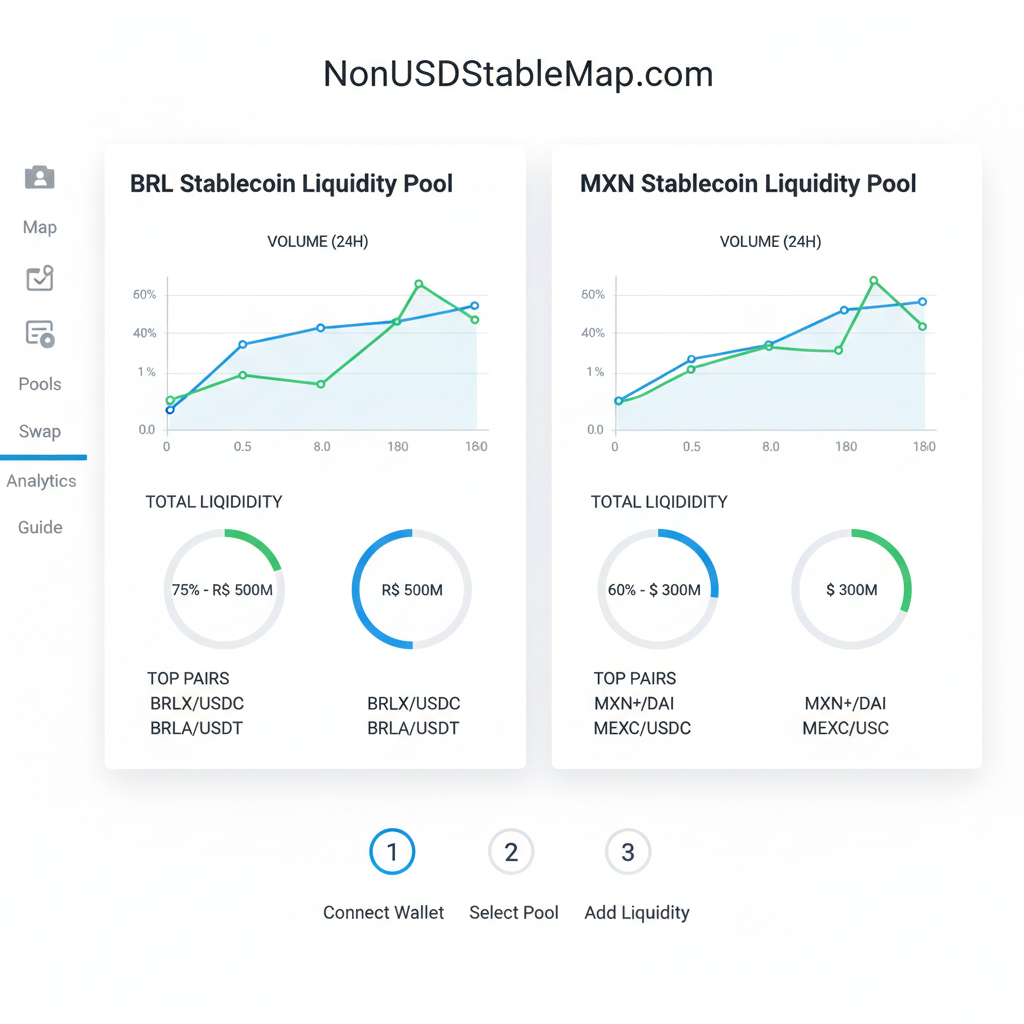
Brazil stands at the forefront of regional stablecoin adoption, fueled by innovations like PIX integration and B3's planned real-pegged stablecoin launch in the first half of 2026. Stablecoins such as cREAL, BRLA, and BRZ dominate DEX trading. cREAL's flagship CELO-cREAL pair has amassed roughly $126 million in total volume, yet its monthly DEX activity tells a sobering story: from a high of $80 million in November 2024, it plummeted to $5 million by July 2025. This decline signals potential saturation or shifting preferences.
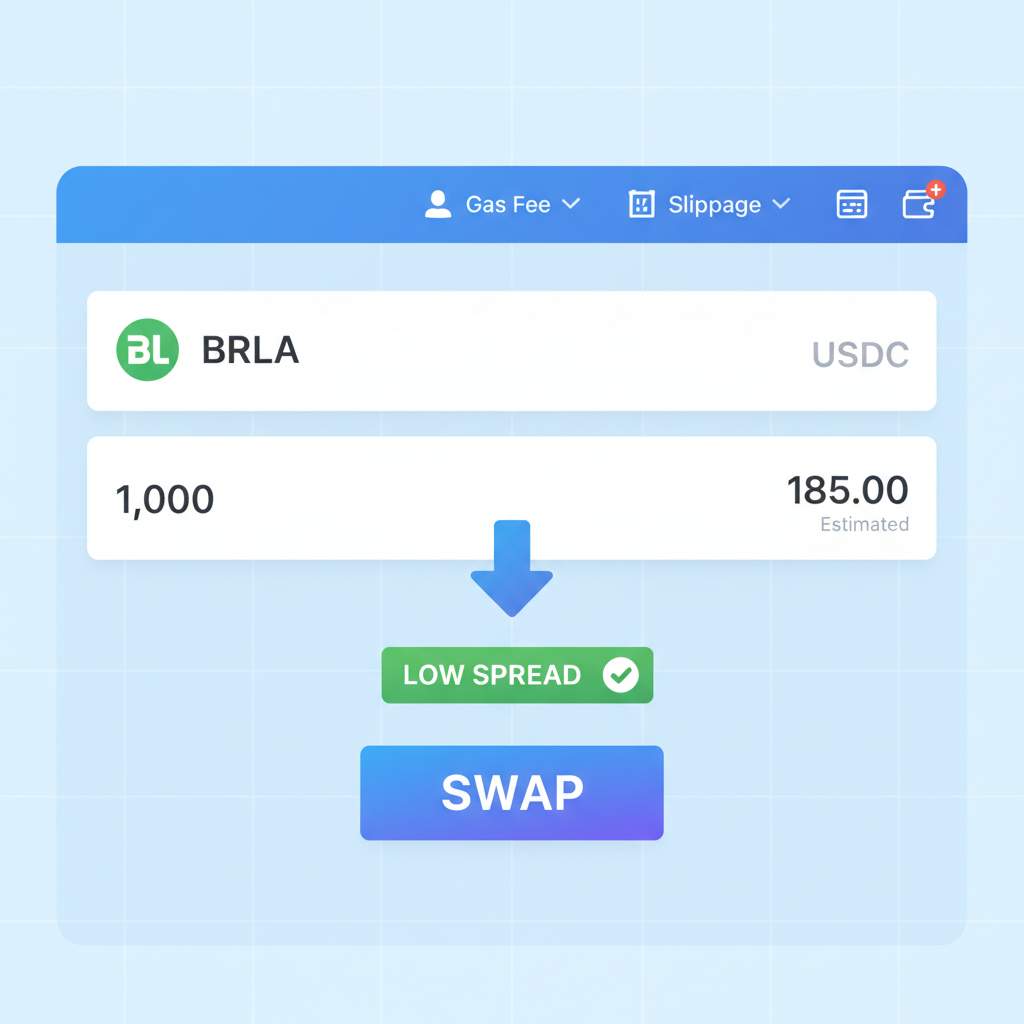
BRLA has emerged as a vital USD gateway, with its BRLA-USDC pair leading at $97.5 million in volume. BRZ maintains steadier footing, splitting liquidity between BRZ-USDC at $15.1 million and BRZ-USDT at $14.7 million. These figures, drawn from current market data, position Brazil's ecosystem as deeper overall, benefiting from domestic payment rails that enable near-instant settlements. For Mexico Brazil arbitrage, BRL stablecoins offer robust entry points, but traders must monitor volume trends closely to avoid illiquid traps.

Mexico's MXN Stablecoin Surge: Volumes on the Rise Amid Warnings
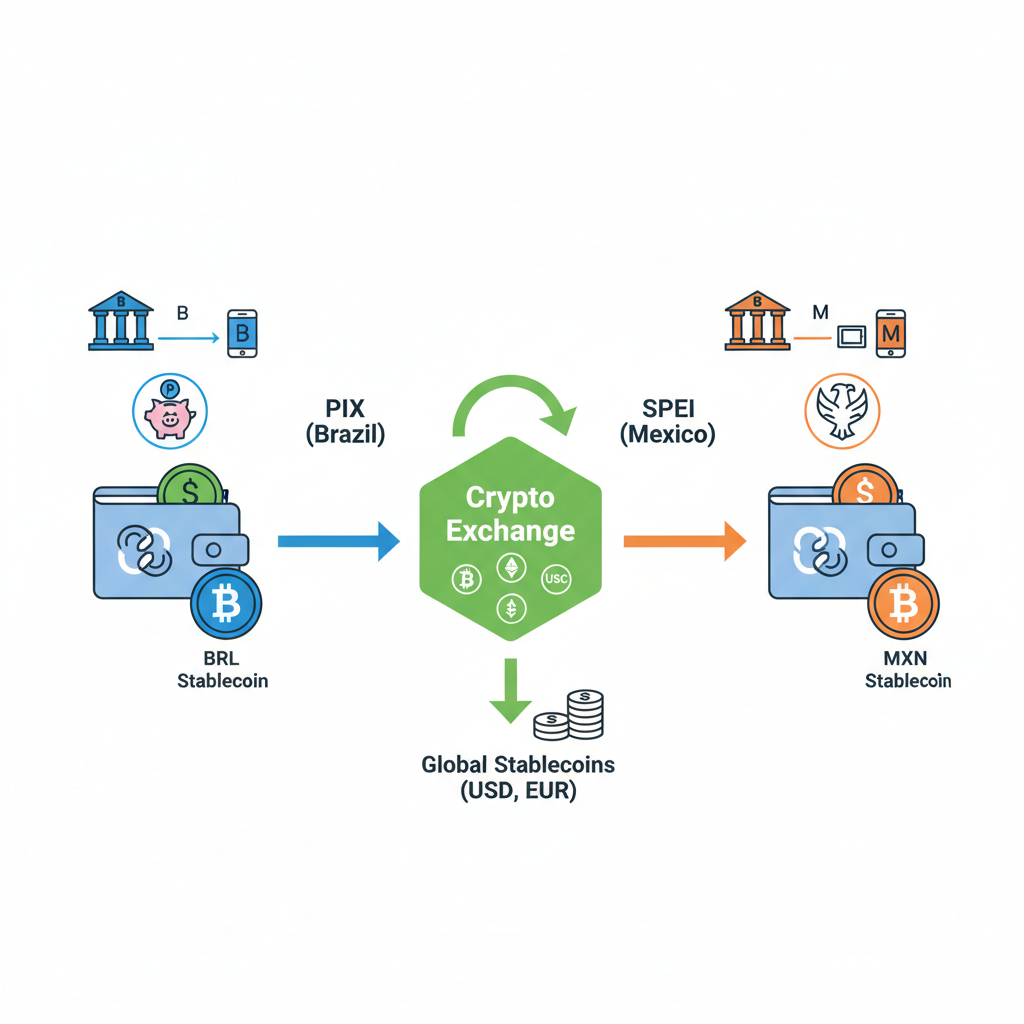
Mexico's peso-pegged stablecoins, including MXNB and MXNe, are carving out a niche despite a less mature infrastructure compared to Brazil. MXNB has seen explosive growth in pairs like MXNB-WAVAX at $29.7 million and MXNB-USDC at $18.6 million, both peaking in May 2025. MXNe, confined to the Base chain, concentrates liquidity in MXNe-USDC at about $18.3 million. SPEI integration mirrors Brazil's PIX advantages, slashing cross-border costs.
Yet, Mexico's central bank has flagged significant risks to financial stability from rapid stablecoin expansion, including ties to traditional finance and global regulatory voids. Mass redemptions or issuer failures could ripple through funding markets, a cautionary note for those eyeing MXN BRL stablecoin compare strategies. Still, these volumes underscore Mexico's appeal for arbitrageurs seeking undervalued depths.
Cross-Border Liquidity Maps: Arbitrage Edges and Spread Realities
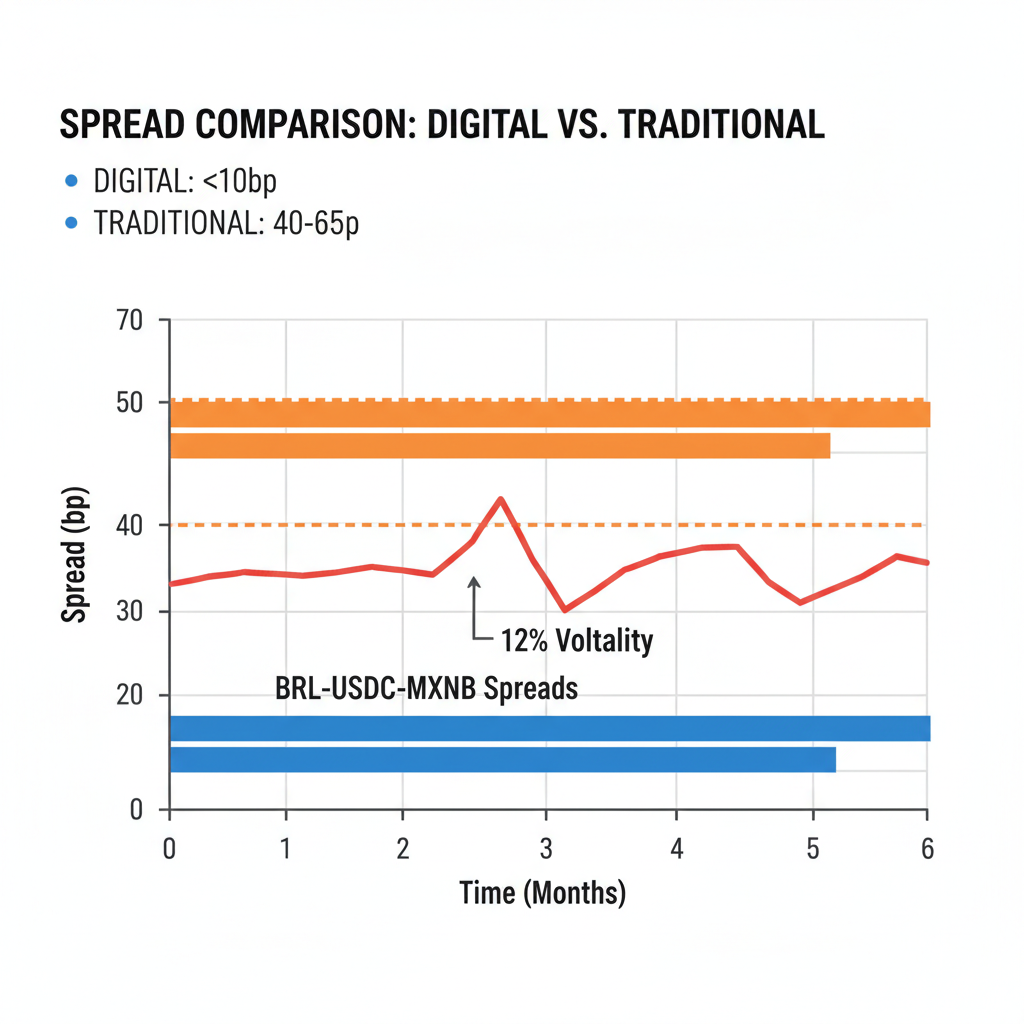
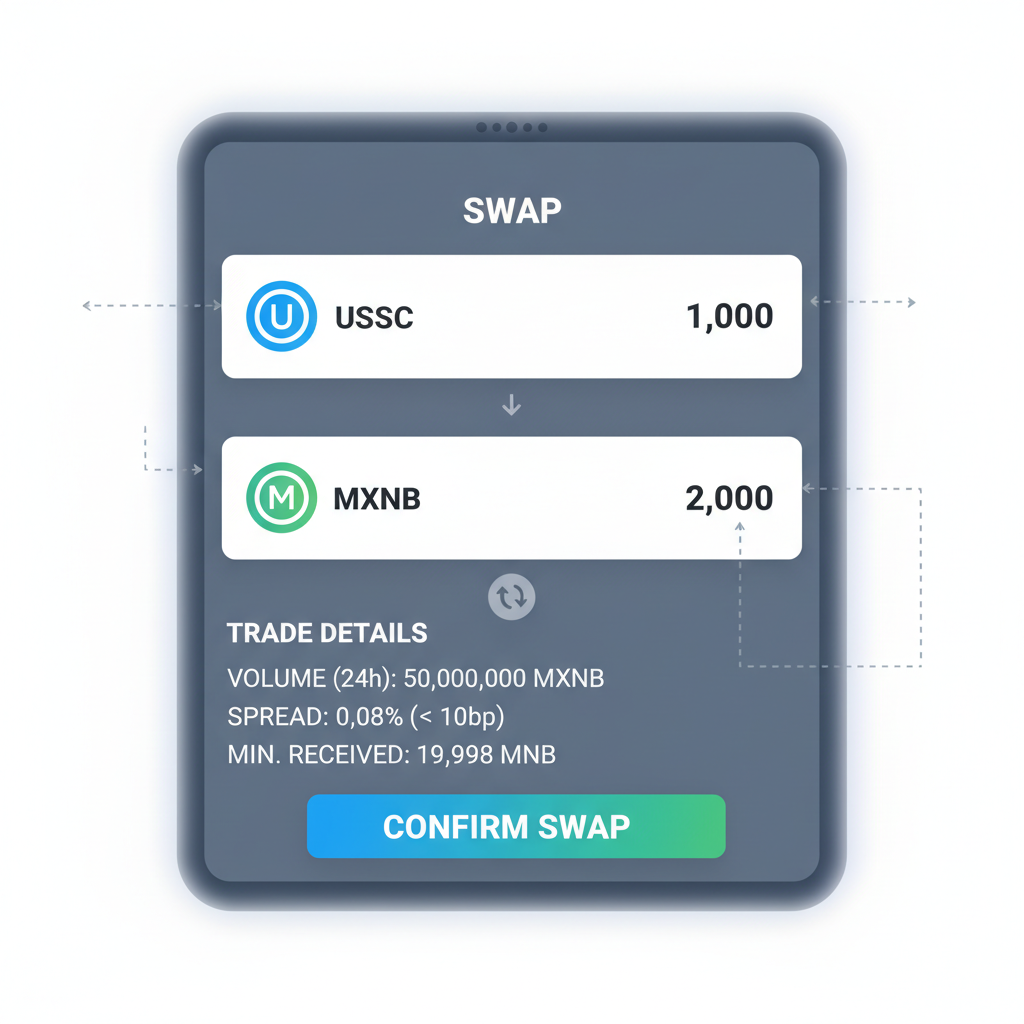
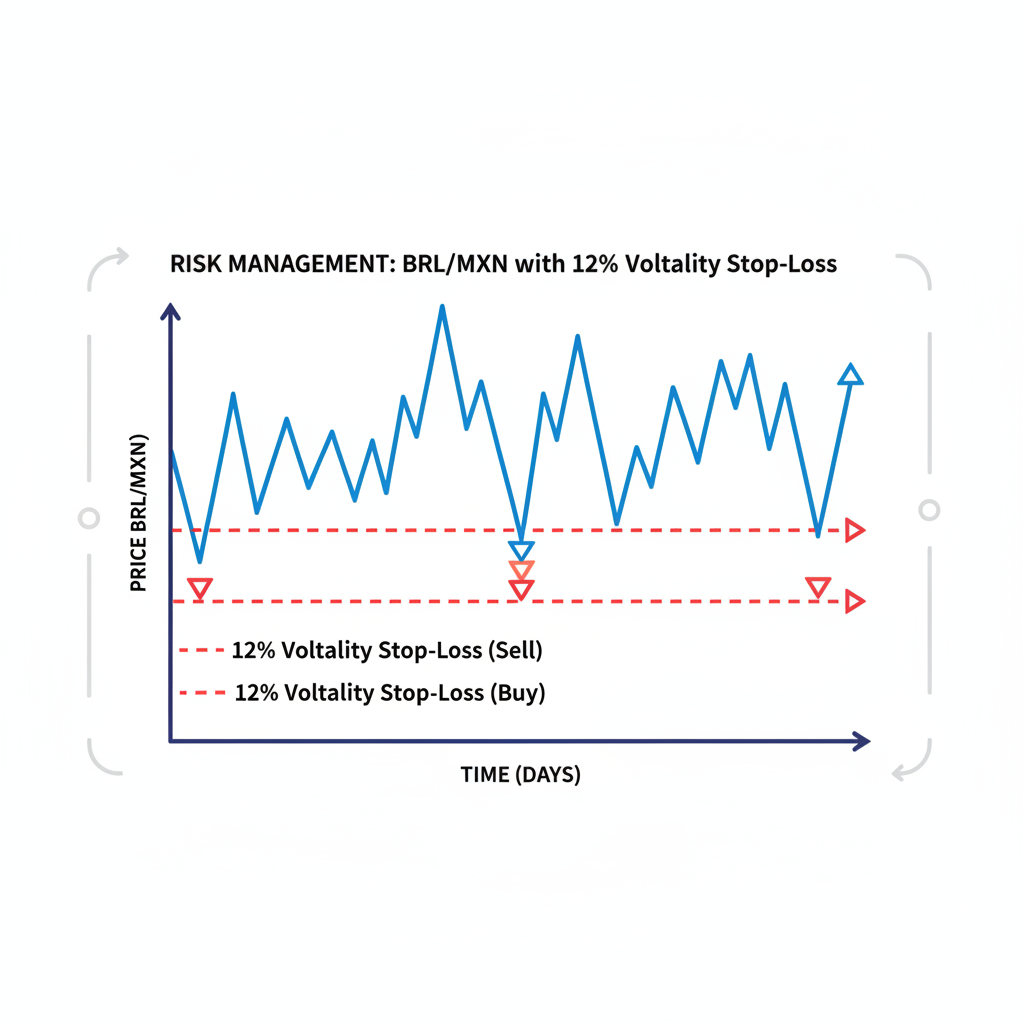
Cross-border liquidity maps for Mexico Brazil arbitrage shine brightest in conversion paths like BRL to USDC to MXNB, clearing with spreads under 10 basis points; traditional rails lag at 40-65 basis points. This efficiency empowers payment providers with near-instant settlements, amplifying P2P ramps MXN BRL viability. Bank of America's historical BRL/MXN long carry trade, yielding 5.6% annually against 12% volatility, hints at stablecoin parallels, though crypto adds layers of risk.
NonUSDStableMap. com's interactive tools reveal these dynamics, from DEX pool depths to exchange order books. Brazil's edge via Pix persists, but Mexico's peso-pegged surges close the gap. Arbitrageurs must weigh B3's tokenization push against Banxico's stability alerts; opportunities abound, yet prudent positioning demands diversified exposures and stop-losses attuned to FX histories like those on Investing. com.
Deeper integration promises growth, with LatAm stablecoins eyeing beyond payments into substantial liquidity pools. For now, Brazil leads in sheer volume, while Mexico offers asymmetric upside, setting the stage for strategic plays in this frontier arena.
Traders pursuing MXN BRL stablecoin compare must prioritize risk-adjusted positioning, blending Brazil's depth with Mexico's momentum. Historical MXN/BRL data from sources like Investing. com underscores volatility patterns that stablecoins now amplify through DEX efficiencies.
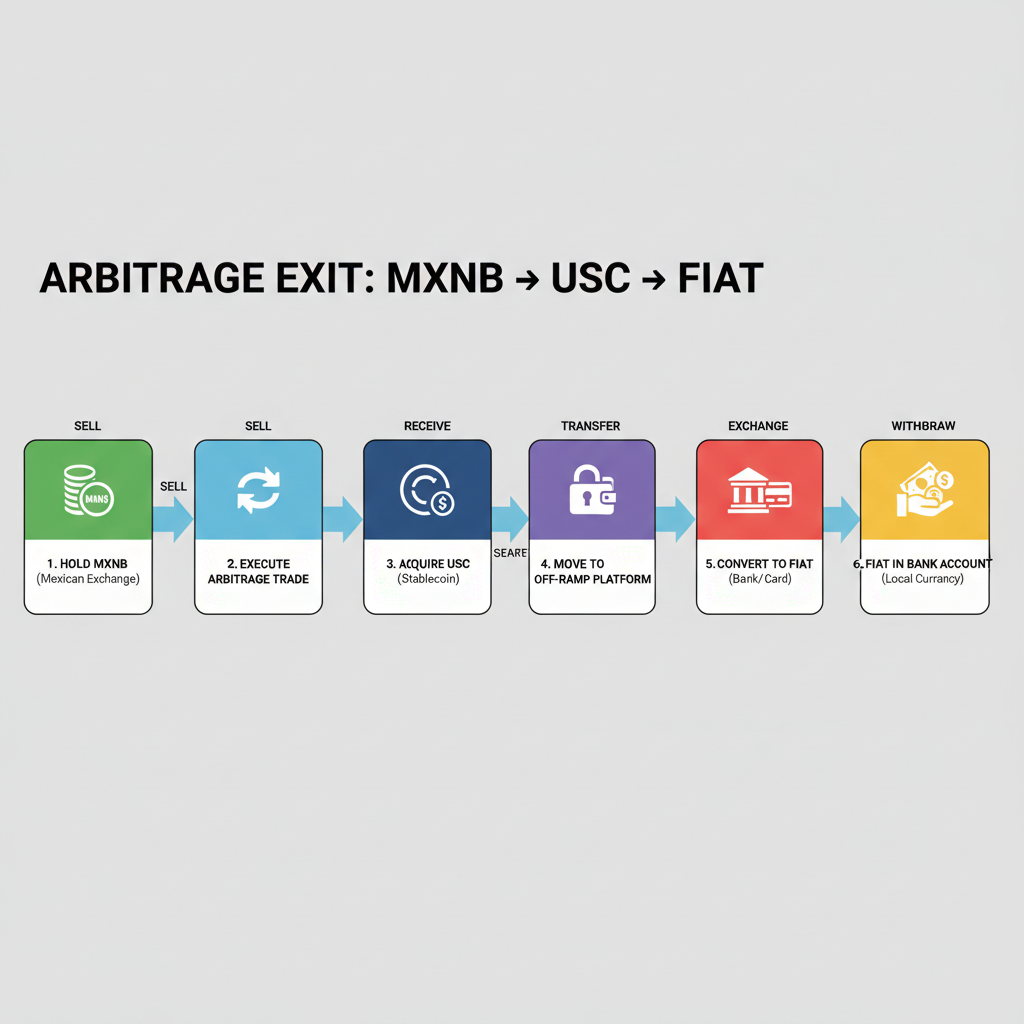
Execute Low-Spread BRL-USDC-MXNB Arbitrage: Monitor, Enter, Exit Safely
Regulatory Headwinds: Banxico's Warnings vs B3's Ambitions
Brazil's trajectory feels more assured, with B3's real-pegged stablecoin set for early 2026 deployment as a tokenized settlement backbone. This move, echoed in MEXC and Rio Times reports, could supercharge clearing between traditional and DeFi rails, drawing liquidity inward. Superteam Brasil envisions a $1T global market by 2030, positioning the real at its core through regulatory tailwinds. Pix's domestic dominance already edges out rivals, streamlining remittances and FX hedges that peso-pegged tokens struggle to match.
Mexico, by contrast, navigates choppier waters. Banxico's alerts on stablecoin risks, rapid growth, tradfi linkages, redemption cascades, loom large, potentially curbing MXNB and MXNe expansion. Plasma's analysis notes Brazil's Pix advantage over SPEI in everyday use, yet Mexico's surges in WAVAX and USDC pairs suggest resilience. For cross-border liquidity map enthusiasts, this divergence creates nuanced plays: long BRL shorts on MXN during regulatory flares, or vice versa amid peso rallies.
BRL 🇧🇷 vs MXN 🇲🇽 Stablecoin Liquidity Comparison (Volumes in $M, as of Feb 2026)
| Country | Stablecoin Pair | Trading Volume ($M) |
|---|---|---|
| 🇧🇷 Brazil | cREAL (total vol) | 126 |
| 🇧🇷 Brazil | BRLA-USDC | 97.5 |
| 🇧🇷 Brazil | BRZ-USDC | 15.1 |
| 🇧🇷 Brazil | **Total** | 238.6 |
| 🇲🇽 Mexico | MXNB-WAVAX | 29.7 |
| 🇲🇽 Mexico | MXNB-USDC | 18.6 |
| 🇲🇽 Mexico | MXNe-USDC | 18.3 |
| 🇲🇽 Mexico | **Total** | 66.6 |
Plasma and PANews highlight how both ecosystems transcend payments, fostering pools that lure arbitrageurs. Yet, as Xponance observes, Mexican assets lose re-rating appeal relative to EM peers, a sentiment spilling into stables. Muthu Ramanathan's carry evolution piece frames BRL/MXN longs at 5.6% yield over 12% vol, a blueprint for stablecoin variants, provided spreads hold tight.
Visualizing the Edge: Tools for P2P Ramps and Depths
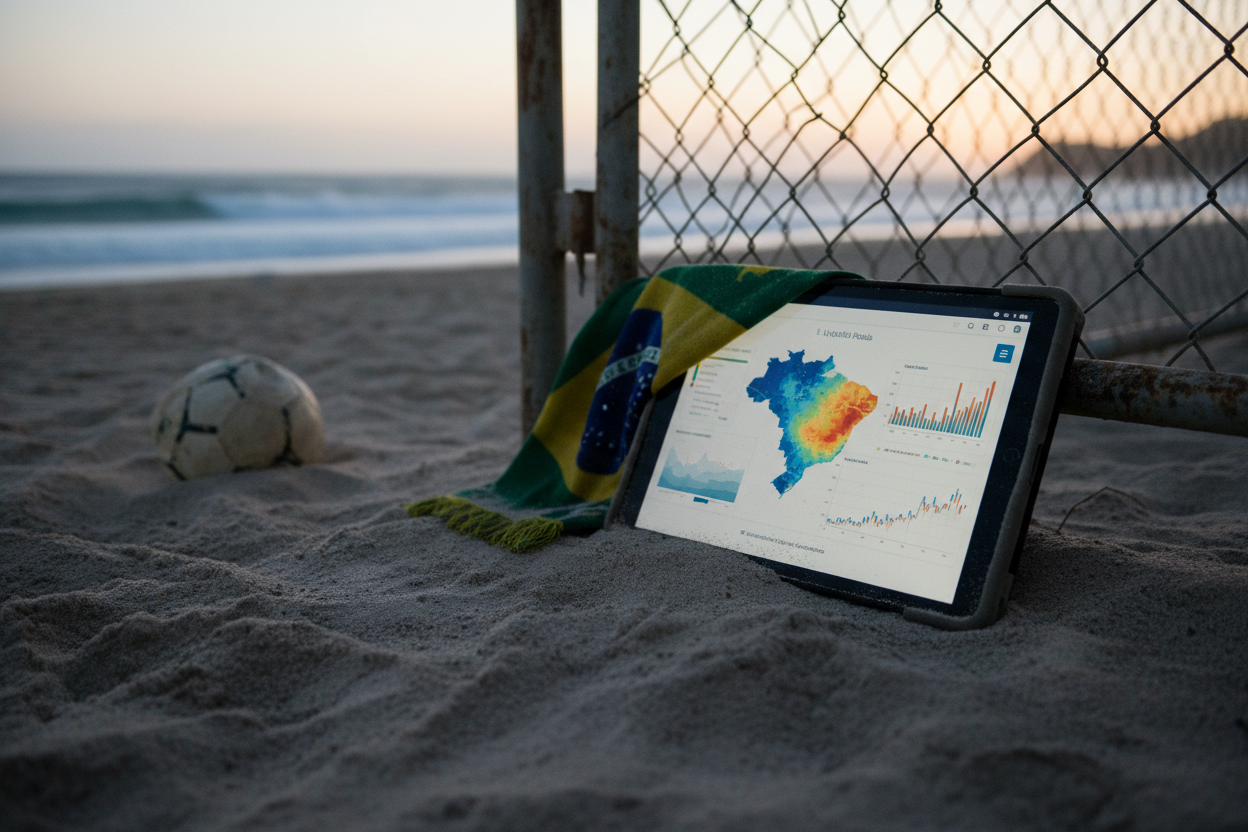
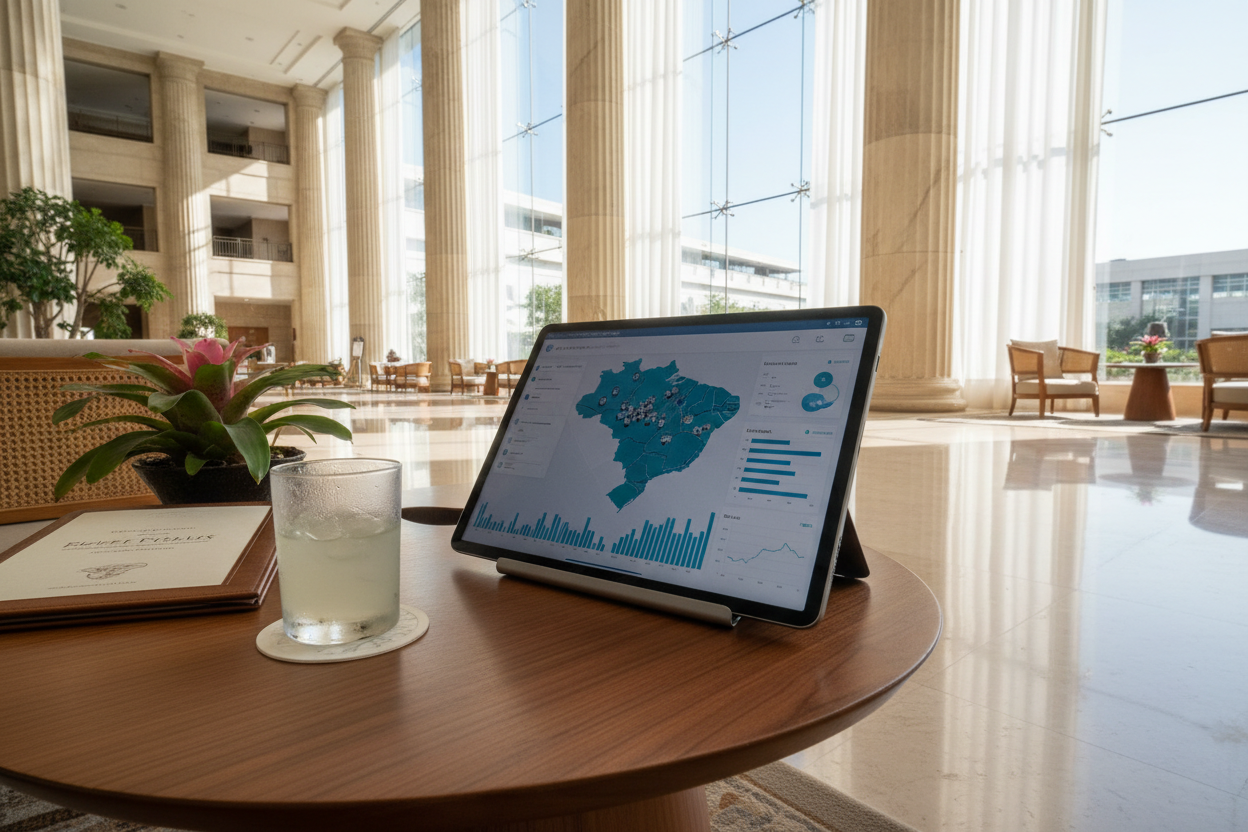
NonUSDStableMap. com equips users with interactive P2P ramps MXN BRL visuals, plotting DEX depths against order books. Picture overlaying cREAL's decline against MXNB's peaks: Brazil's $126 million cumulative draw feels secure, but Mexico's May 2025 spikes signal breakout potential. MEXC's LatAm trends forecast accelerating adoption, yet declining cREAL volumes from $80 million to $5 million remind us momentum shifts fast.
Comparison of MXN vs BRL Stablecoin Liquidity (2026 Forecast)
| Metric | Brazil (BRL) | Mexico (MXN) | Cross-Border Arbitrage Notes |
|---|---|---|---|
| Top Regional Depth | BRLA-USDC: $97.5M | MXNe-USDC: $18.3M | Brazil leads in primary USD gateway liquidity |
| BRZ vs MXNB USDC Depth | BRZ-USDC: $15.1M | MXNB-USDC: $18.6M | Comparable depths enable efficient pairing for arbitrage |
| Additional Key Pairs | BRZ-USDT: $14.7M cREAL-CELO: $126M (cumulative) | MXNB-WAVAX: $29.7M | Diversified pairs support higher volumes; cREAL monthly volume declining |
| Conversion Spread (BRL → USDC → MXNB) | <10 basis points | N/A | vs traditional rails 40-65 basis points: enables near-instant low-cost settlements |
| Carry Trade (BRL/MXN long) | 5.6% annual positive carry | N/A | ~12% historical volatility; overlays with stablecoin liquidity for arbitrage signals |
In practice, regional stable depths favor Brazil for scale, BRLA-USDC's $97.5 million dwarfs MXNe-USDC's $18.3 million, but Mexico tempts with asymmetry. FreeCurrencyRates. com's 2026 MXN/BRL histories reveal monthly swings ideal for hedging via stables, especially as B3 tokenization bridges gaps. Traders ignoring Banxico's stability cautions risk amplified spillovers; I've seen frontier plays unravel on lesser triggers.
From a risk management lens honed over 14 years, the real prize lies in calibrated exposures: 60/40 BRL/MXN tilts, stress-tested against 12% vol regimes. Platforms like ours demystify this, turning data into defensible edges. As LatAm stables mature, those blending PIX/SPEI speeds with vigilant monitoring will capture the upside, while others chase shadows in illiquid dips.


No comments yet. Be the first to share your thoughts!