Non-usd stablecoins budget
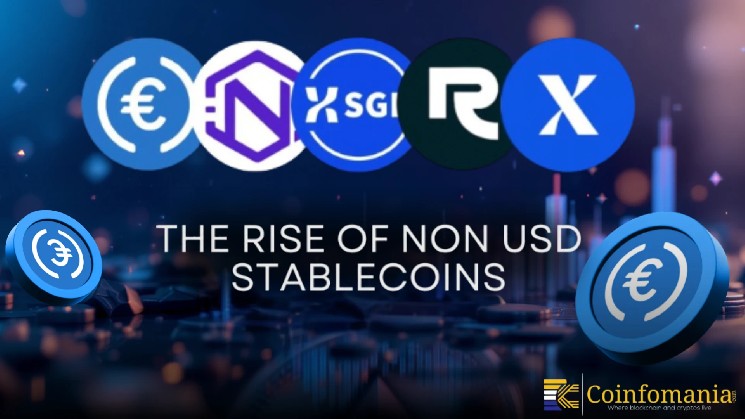
Non-USD stablecoins serve specific regional needs rather than replacing the US dollar as the global standard. While 95% of fiat-backed stablecoins are denominated in dollars, non-USD options are emerging where local regulation supports them or where cross-border transfers face restrictions. These assets remain niche, offering localized liquidity but often suffering from fragmented markets and lower trading volumes.
When building a budget around non-USD stablecoins, prioritize assets with clear regulatory backing and established local utility. Look for coins that are actively used in their home markets for payments or savings, rather than speculative derivatives. This approach helps mitigate the risk of liquidity traps and ensures you can enter and exit positions without significant slippage.
The tradeoff is clear: you gain exposure to local economic conditions and potentially higher yields in emerging markets, but you accept higher complexity and lower liquidity. For most global DeFi strategies, non-USD stablecoins should complement, not replace, your core USD holdings. Use them where they offer a distinct advantage, such as accessing regulated European markets under MiCA or participating in high-growth LATAM ecosystems on networks like Polygon.
Shortlist real options
The stablecoin market is heavily skewed toward the US dollar, which accounts for roughly 97% of fiat-backed stablecoins. However, a growing number of non-USD options are gaining traction in specific regions and use cases. These alternatives often address local regulatory frameworks, such as the EU’s MiCA, or provide access to local liquidity where USD transfers are restricted or expensive.
When evaluating non-USD stablecoins, the primary trade-off is liquidity versus local utility. While USD stablecoins offer deep liquidity across global exchanges, non-USD coins often provide better integration with local banking rails and lower friction for domestic transactions. Below is a comparison of the strongest contenders currently available for DeFi yields and global payments.
| Stablecoin | Peg | Primary Region | Best For |
|---|---|---|---|
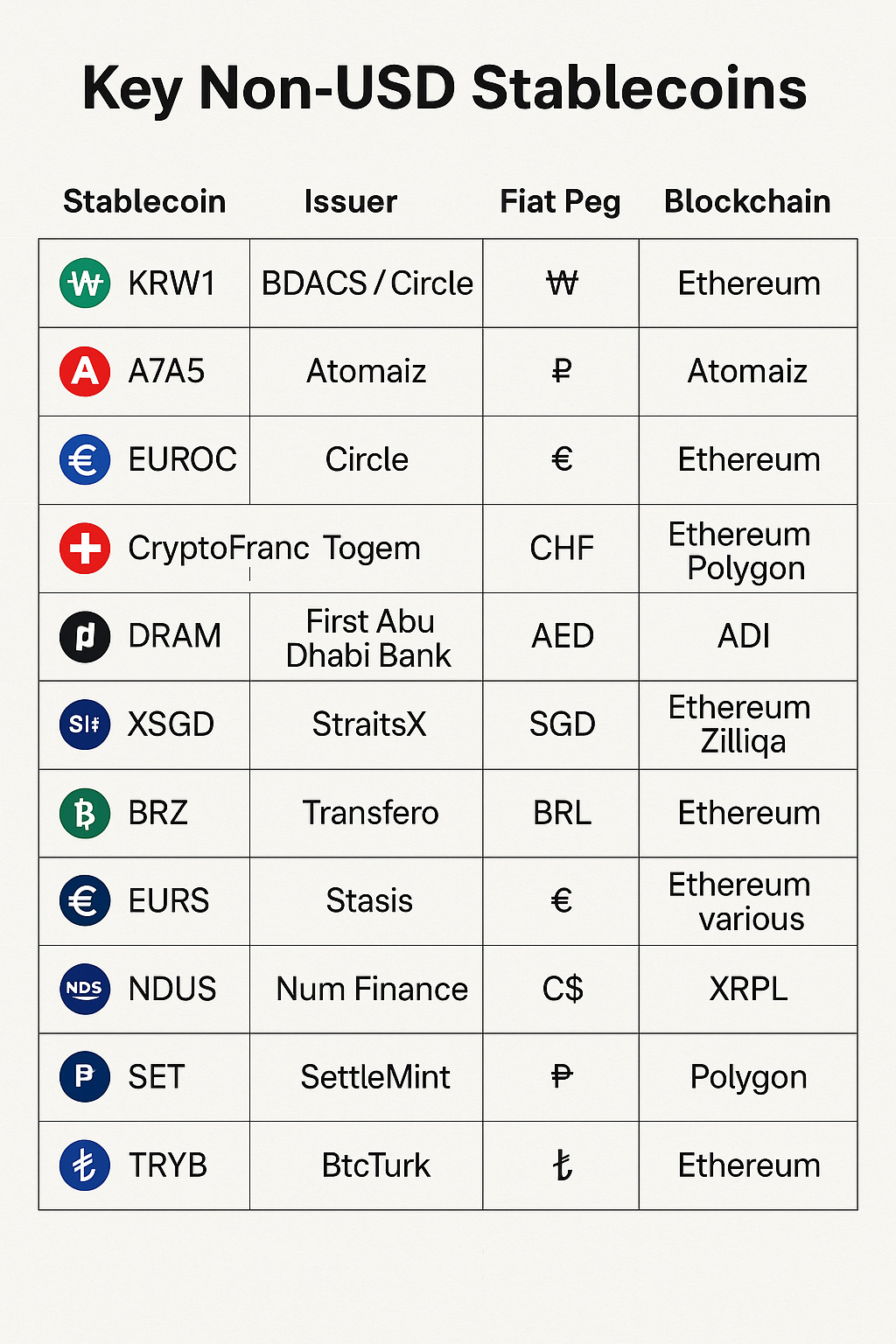
| EUROC | Euro (EUR) | Europe | MiCA-compliant payments and EU DeFi |
| BRZ | Brazilian Real (BRL) | Brazil | Local crypto market access and settlements |
| A7A5 | Russian Ruble (RUB) | Russia | Cross-border transfers under sanctions |
| JPYC | Japanese Yen (JPY) | Japan | Local DeFi and yen-pegged stability |
EUROC stands out as the most liquid non-USD option, particularly for users in the European Economic Area. Backed by regulated institutions and compliant with MiCA, it offers a credible alternative to USD stablecoins for EU-based DeFi protocols and cross-border payments. Its integration with major chains like Polygon and Ethereum ensures reasonable liquidity, though it remains secondary to USDC in global volume.
BRZ is the dominant stablecoin in Brazil, serving as a bridge between the local fiat system and blockchain networks. It is particularly useful for users seeking exposure to the Brazilian crypto market or those needing to settle payments in BRL without the volatility of the local fiat currency. Liquidity is concentrated on Brazilian exchanges and specific DeFi platforms.
A7A5 has emerged as a niche but critical tool for Russian users navigating international sanctions. By providing a ruble-pegged stablecoin on-chain, it facilitates cross-border transfers and local DeFi activities where traditional banking channels are restricted. Its utility is highly context-specific and largely confined to the Russian ecosystem.
JPYC offers yen stability for Japanese users, catering to a market with strict capital controls and a growing interest in digital assets. While liquidity is lower than global giants, it provides a reliable peg for local transactions and DeFi strategies that require yen exposure. It is best suited for users with a direct need for JPY-denominated digital assets.
Inspect the expensive parts
Non-USD stablecoins like the Brazilian Real-backed BRZ or the Russian A7A5 offer lower fees and direct local currency exposure, but they carry hidden risks that USD coins do not. If you are using these for DeFi yields or cross-border payments, a quick visual check of the contract and liquidity isn't enough. You need to verify the structural safeguards that prevent the peg from breaking during market stress.
Use this ordered checklist to inspect the high-cost failure points before locking capital into a non-USD asset. Each step targets a specific vulnerability common in emerging market or regulated fiat coins.
Check whether the coin is backed by cash, short-term government treasury bills, or commercial paper. Coins backed by local government debt carry sovereign risk. If the reserve is held by a centralized custodian, verify that the custodian is audited regularly. A lack of transparent, real-time reserve proof is the first sign of structural fragility.

Look for a clear, on-chain mint-and-burn process controlled by regulated entities. If the supply can only be changed by a central admin wallet without transparent proof of reserve backing, you are exposed to counterparty risk. Legitimate non-USD stablecoins must allow for direct redemption with the issuer or a verified partner to maintain the peg.

Non-USD stablecoins often suffer from fragmented liquidity. Check the depth of the trading pair on decentralized exchanges. Thin liquidity means large sells will cause significant slippage, effectively breaking the peg during volatility. If the trading volume is consistently low compared to the market cap, the coin is vulnerable to a liquidity crisis.

Many non-USD stablecoins operate under specific regional regulations, such as MiCA in Europe. Verify if the issuer is currently compliant with its local financial authority. Regulatory changes or sanctions can freeze assets or restrict redemption. A coin that loses its regulatory license may become illiquid or untradeable overnight.

Before depositing large amounts, test the redemption process with a small amount. Ensure you can convert the stablecoin back to the local fiat currency without excessive fees or delays. If the redemption gateway is restricted to institutional players or requires lengthy KYC procedures, the coin is not truly liquid for retail users.
By following these steps, you can separate robust non-USD stablecoins from those that are merely speculative. Always prioritize coins with transparent reserves, deep liquidity, and clear regulatory standing to protect your yields and payments.
Ownership costs and maintenance surprises
A low minting fee or a cheap initial purchase price doesn’t tell the whole story of what a non-USD stablecoin actually costs you. While the entry price might look attractive compared to traditional currency exchange spreads, the real expenses often hide in the maintenance and usage layers. If you’re holding these assets for DeFi yields or cross-border payments, you need to account for the friction that appears once the token is in your wallet.
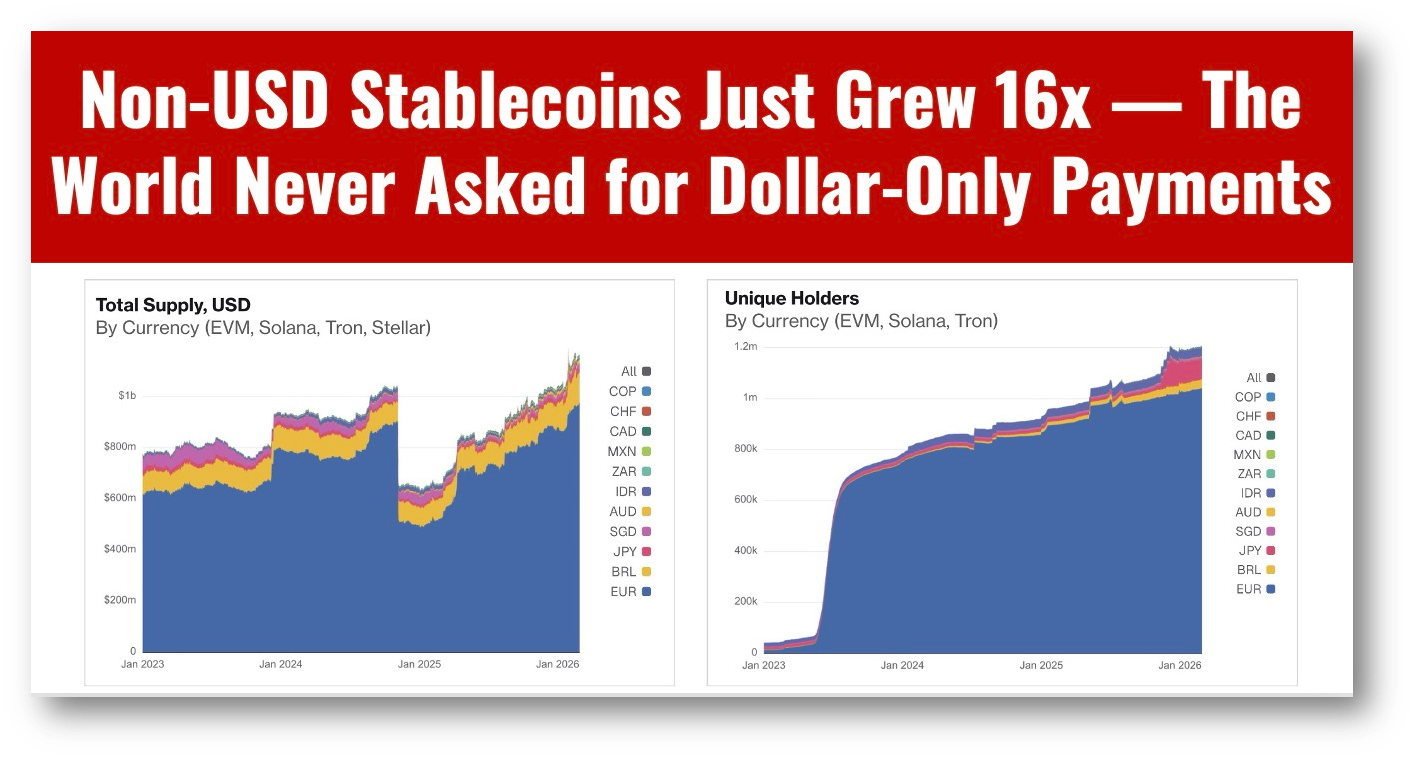
The first hidden cost is liquidity fragmentation. Unlike the US dollar, which is universally accepted, non-USD stablecoins like the Brazilian Real-backed BRZ or the Euro-based EURC often trade on thinner pools. When you need to exit or swap, you may face significant slippage. This isn’t just a minor fee; it’s a structural tax on liquidity that can eat into yields before you even see a return. As noted in industry analysis, this fragmentation is the primary structural challenge for non-USD stablecoins, making them less "liquid" than their USD counterparts despite the lower nominal fees.
Secondly, consider the regulatory and compliance overhead. In regions like Europe, MiCA regulations impose strict reserve auditing and reporting requirements. While this adds safety, it can also introduce delays or additional fees for certain transfers or swaps, especially if your wallet provider needs to perform enhanced due diligence on cross-border flows. For users in emerging markets, local banking rails may charge withdrawal fees that dwarf the on-chain gas costs.
Finally, smart contract risk is a cost that doesn’t appear on a balance sheet but must be priced in. Non-USD stablecoins are often newer or operate on different governance models than USD giants. A protocol upgrade or a security audit gap can freeze funds or depeg the asset, effectively costing you 100% of your principal. Always check the audit history and governance structure before committing capital, treating these risks as part of the total cost of ownership.
Non-usd stablecoins: common: what to check next
Before moving capital into local currency tokens, it helps to understand where these assets fit in the broader crypto economy. While the US dollar dominates, non-USD stablecoins are gaining specific traction in regulated markets and regions with strict capital controls.
Helpful gear
Use these product recommendations as a starting point, then choose the size, material, and price point that fit how you actually use the gear.

As an Amazon Associate, we may earn from qualifying purchases.
No comments yet. Be the first to share your thoughts!