
Non-usd stablecoin choices that change the plan
Non-USD stablecoins serve a specific, high-value niche: they bridge the gap between global crypto infrastructure and local economic realities. While USD stablecoins dominate trading pairs and global liquidity, local currency tokens solve problems that the dollar cannot. They protect against local inflation, reduce foreign exchange friction for cross-border trade, and keep capital within regional ecosystems.
The decision to use a non-USD stablecoin depends on your primary objective. You are not choosing between "better" and "worse" assets, but rather between currency stability and liquidity depth. Understanding where these assets excel—and where they fall short—is critical for risk management.
Liquidity vs. Local Utility
The most significant tradeoff is liquidity. USD stablecoins like USDT and USDC benefit from deep, global order books. Non-USD stablecoins often trade on smaller exchanges or within specific regional hubs. This means exit liquidity can be thinner, and slippage may be higher during volatile market conditions.
However, the utility is direct. If you are paying suppliers in Mexico, using a USD stablecoin requires a conversion step that incurs fees and exposes you to USD/MXN volatility. A local stablecoin removes that friction entirely. You are trading the depth of the global market for the precision of local settlement.
Regulatory and Counterparty Risk
Non-USD stablecoins are often more complex from a regulatory standpoint. They may be issued in jurisdictions with less transparent reserve auditing or different legal frameworks than major US or EU issuers. This context-specific nature means due diligence must be localized. A token that is fully compliant in Brazil may have no legal standing in Singapore.
Additionally, the issuer risk is more pronounced. Smaller issuers may lack the capital buffers or insurance mechanisms of major USD providers. If the issuer faces financial distress, redemption processes may be slower or more opaque. Always verify the reserve composition and the legal entity behind the token before holding large balances.
Technical and Ecosystem Fragmentation
Non-USD stablecoins are rarely native to Ethereum mainnet. They often live on Layer 2s, sidechains, or specific regional blockchains (like Polygon for LATAM or Tron for APAC). This creates fragmentation. You cannot simply send a Brazilian Real stablecoin to an Ethereum wallet; you must ensure both sender and receiver are on the same network.
This fragmentation limits interoperability but enhances efficiency within the target region. For users embedded in a specific ecosystem, the lower fees and faster finality outweigh the inconvenience of network switching. For global traders, it adds operational complexity.
| Metric | USD Stablecoins | Non-USD Stablecoins |
|---|---|---|
| Primary Use Case | Global trading, DeFi collateral, remittances | Local payments, inflation hedge, regional trade |
| Liquidity Depth | Very High (Global markets) | Moderate to Low (Regional/Specific DEXs) |
| FX Friction | High (Requires conversion to local currency) | None (Native local currency) |
| Regulatory Transparency | High (Major US/EU issuers) | Variable (Depends on local jurisdiction) |
| Network Compatibility | Universal (Ethereum, Solana, etc.) | Fragmented (Often L2s or specific chains) |
When to Choose Non-USD
Use non-USD stablecoins when your cash flow is tied to a specific local economy. If you earn in Euros and spend in Euros, the Euro-pegged stablecoin removes exchange rate risk. If you are a freelancer in Argentina dealing with hyperinflation, a local stablecoin preserves purchasing power more effectively than holding USD in a volatile local banking system.
Avoid them if your primary goal is trading efficiency or moving capital across borders quickly. The liquidity penalties and network fragmentation make them inefficient for global arbitrage or rapid DeFi yield farming. Stick to USD stablecoins for global mobility, and reserve non-USD tokens for local utility.
Where each option wins
Choosing a non-USD stablecoin requires matching the asset to your specific geographic or functional needs. No single token dominates all markets; instead, each option excels in a narrow slice of the ecosystem, from local remittances to regional trading pairs.
Local currency stability (LATAM, APAC, EMEA)
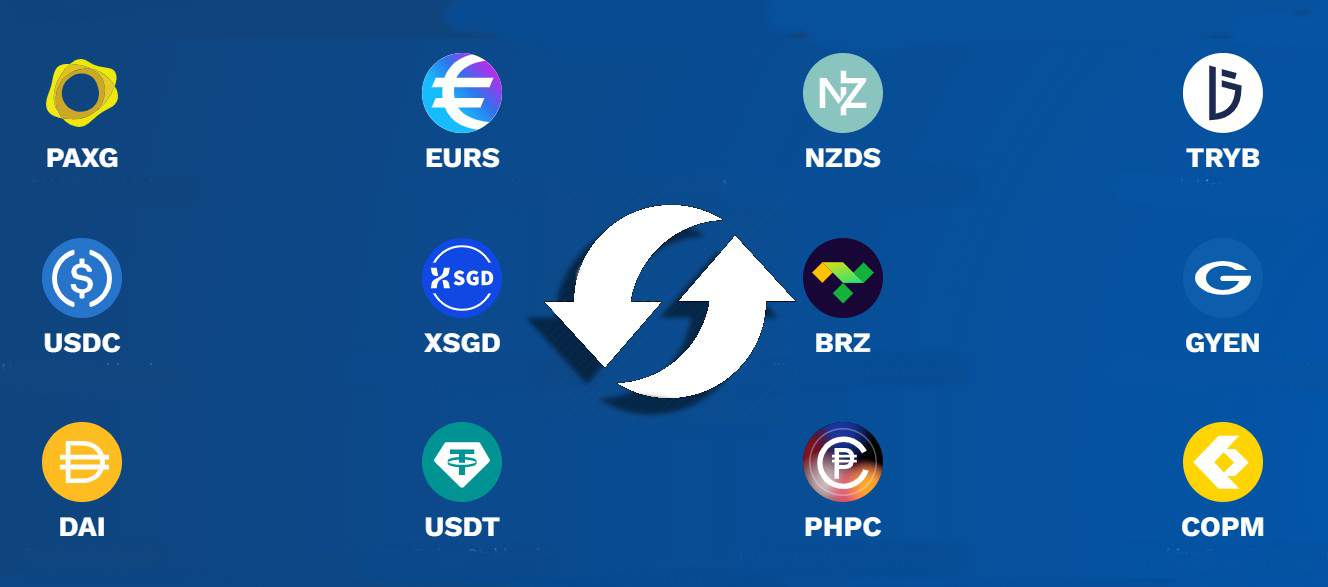
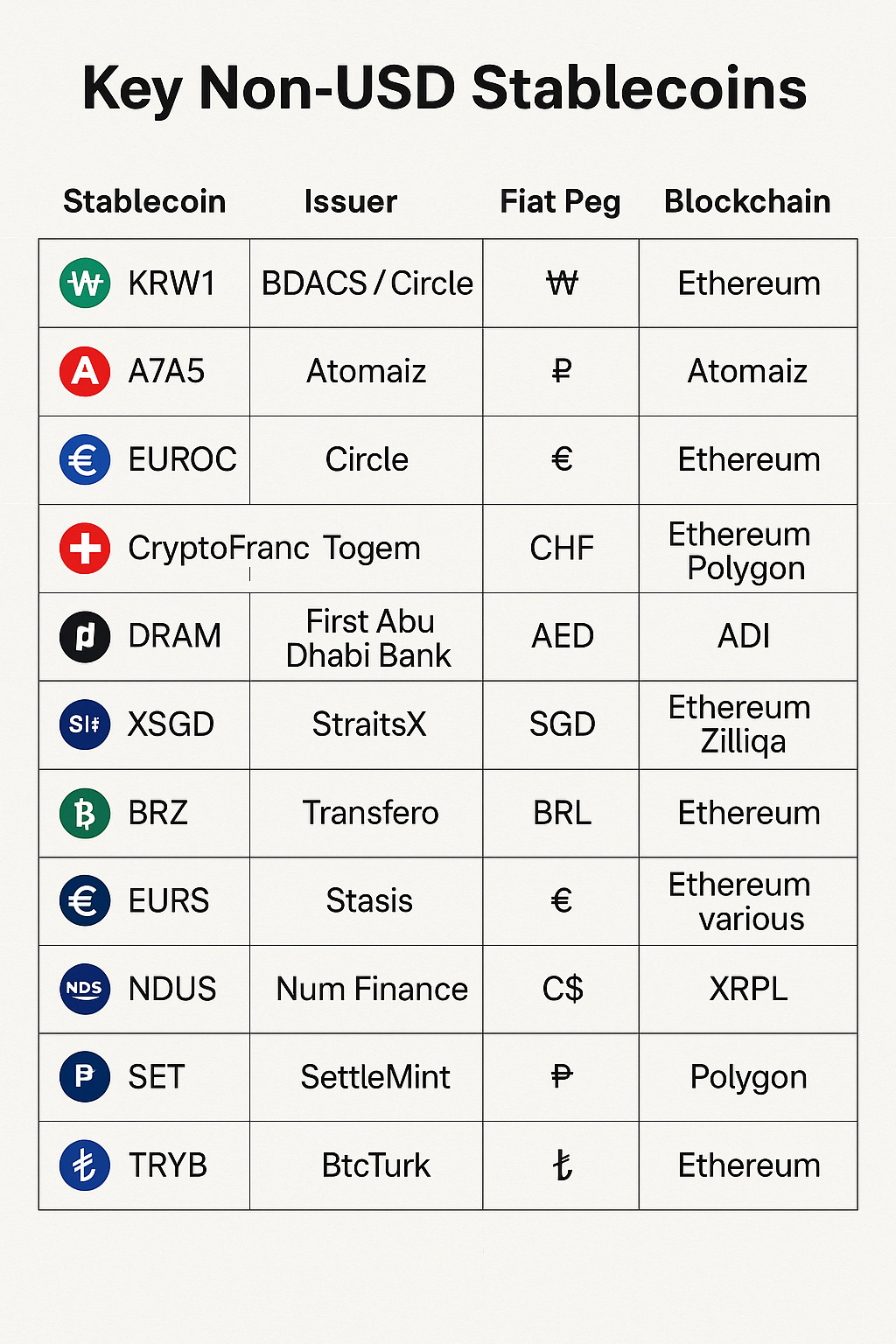
For residents in countries with volatile fiat currencies, local stablecoins offer a digital shield against inflation. Tokens like the Mexican Peso-pegged USDC or Brazilian Real-pegged BRLC allow users to hold value in their native currency without relying on traditional banking rails. This is particularly effective for cross-border remittances, where settlement is faster and cheaper than wire transfers. Polygon’s stablecoin list highlights over 30 such assets, demonstrating the growing liquidity of local currency on-chain.
Regional trade and settlement
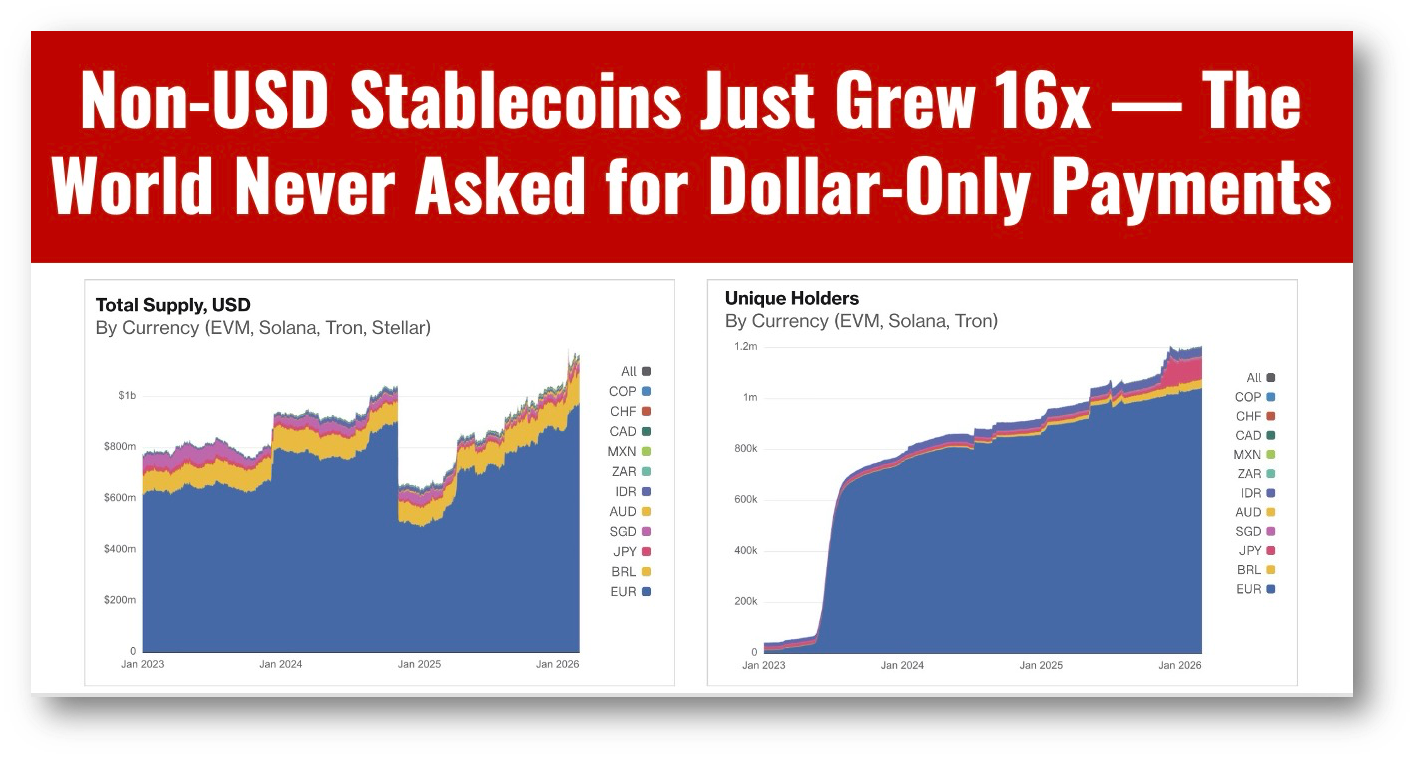
Businesses operating within specific trade corridors often prefer stablecoins pegged to the currencies of their partners. For instance, a trader between Japan and South Korea might use JPY-pegged or KRW-pegged stablecoins to avoid USD conversion fees and exchange rate risk. This reduces friction in B2B transactions and aligns with local regulatory frameworks that may restrict USD exposure. The recent surge in non-USD stablecoin supply to $2 billion signals strong adoption in these niche markets.
Arbitrage and trading pairs
Crypto traders use non-USD stablecoins to access localized liquidity pools on decentralized exchanges. In regions where USD pairs are dominated by whales, local stablecoin pairs can offer better depth and tighter spreads for smaller trades. Additionally, arbitrageurs exploit price discrepancies between the stablecoin’s peg and the local fiat market, providing liquidity while earning small margins. This is most common in high-inflation economies where the local currency’s fiat value fluctuates daily.
Speculative yield and DeFi integration
Some non-USD stablecoins are integrated into regional DeFi protocols that offer higher yields than USD-based counterparts. These protocols often cater to local investors seeking returns that outpace inflation. However, this comes with higher risk, including smart contract vulnerabilities and peg instability. Users must evaluate the collateralization mechanism and audit history of each protocol before committing funds.
Decision framework
Use the following checklist to select the right stablecoin:
- Geographic relevance: Does the stablecoin match your local currency or trade partner’s currency?
- Regulatory compliance: Is the issuer compliant with local financial regulations?
- Liquidity depth: Are there sufficient trading pairs on local exchanges?
- Peg stability: Has the stablecoin maintained its peg over the last six months?
- Protocol integration: Is it supported by DeFi platforms you intend to use?
If you need a reliable store of value in your local currency, prioritize regulatory compliance and liquidity. If you are trading, focus on peg stability and exchange support. For DeFi users, audit history and protocol integration are paramount.
| Use Case | Best Option | Risk Level |
|---|---|---|
| Local Remittances | Local Currency Peg | Low |
| Regional Trade | Partner Currency Peg | Medium |
| Crypto Arbitrage | High Liquidity Peg | High |
| DeFi Yield | Protocol-Integrated Peg | High |
Details Worth Checking
Non-USD stablecoins offer local currency exposure and lower fees, but they carry specific risks that differ from US-dollar pegs. Before integrating these assets into your portfolio or business operations, verify the following details. Each item below represents a concrete check to avoid unexpected slippage, regulatory friction, or liquidity traps.

Not all stablecoins are fully backed by cash. Some use algorithmic mechanisms or hybrid models that can de-peg during market stress. Check the official documentation to see if the reserve holds local treasury bills, commercial paper, or a basket of assets. For example, a Brazilian real stablecoin might hold BRL-denominated government bonds. Ensure the reserve ratio is 1:1 and audited by a recognized third party.
Non-USD stablecoins often operate under different legal frameworks than their USD counterparts. Some require strict Know Your Customer (KYC) verification for minting and redeeming, while others may be restricted in certain jurisdictions. Verify if the issuer is licensed in the target country. For instance, stablecoins targeting Latin America may need approval from local central banks. Failure to comply can lead to frozen assets or inability to redeem.
Local currency stablecoins may have lower trading volumes than major USD pairs. This can lead to wider bid-ask spreads and higher slippage when converting. Check the depth of order books on major exchanges and decentralized liquidity pools. If you plan to use these coins for large transactions, ensure there is sufficient liquidity to exit the position without significant price impact.
The underlying blockchain and smart contracts must be secure. Look for recent audits from reputable firms like CertiK or OpenZeppelin. Check if the contract has been upgraded or if there are known vulnerabilities. For non-USD stablecoins, which may be newer or less tested, the risk of exploits is higher. Ensure the issuer has a bug bounty program and a track record of responsive security management.
Non-usd stablecoins: what to check next
Here are the direct answers to the most common questions about non-USD stablecoins, their use cases, and how they compare to the dominant US dollar pegs.
Helpful gear
Use these product recommendations as a starting point, then choose the size, material, and price point that fit how you actually use the gear.

As an Amazon Associate, we may earn from qualifying purchases.
No comments yet. Be the first to share your thoughts!