
BRL Stablecoin Liquidity Maps 2026: BBRL on Polygon vs BRZ Volumes in Brazil
In the pulsating heart of Brazil’s crypto ecosystem, 2026 marks a pivotal shift with BBRL stablecoin liquidity exploding on Polygon, challenging the longstanding dominance of BRZ. As traders scour BRL stablecoin liquidity maps on platforms like NonUSDStableMap. com, the contrast between BBRL’s regulated influx and BRZ’s resilient volumes reveals untapped arbitrage paths and DeFi opportunities. With Banco Braza’s bold move, Brazilian Real-pegged assets are bridging traditional FX rails to blockchain efficiency, fueling P2P ramps and exchange depths across emerging markets.

Banco Braza, one of Brazil’s premier foreign exchange institutions, has catapulted its BBRL stablecoin onto the Polygon network, unlocking regulated BRL liquidity for seamless global payments. This expansion isn’t mere hype; it’s a calculated play to slash transaction costs and accelerate settlements, drawing in cross-border traders who demand speed without the volatility tax. Sources peg BBRL’s market cap at $1.23 billion, with daily volumes surging past $109 million, signaling robust adoption amid Brazil’s crypto boom.
BBRL on Polygon: Turbocharging BRL DeFi Pools
The Polygon integration positions BBRL as a frontrunner in BBRL liquidity Polygon Brazil dynamics. By tethering fully backed, regulated reals to Polygon’s scalable Layer 2, BBRL sidesteps Ethereum’s gas bottlenecks, making it ideal for high-frequency P2P trades and yield farming. Imagine liquidity pools swelling with real-time depths that rival centralized exchanges, yet powered by DeFi composability. NonUSDStableMap. com’s interactive maps now highlight these pools, showing BRL DeFi pools depths that enable arbitrageurs to pivot between BBRL and global USD stables with minimal slippage.
This launch joins other BRL contenders like BRLV, but BBRL’s backing by Brazil’s largest FX bank lends unmatched credibility. Industry whispers suggest it’s already boosting Polygon’s POL token, as on-chain flows multiply. For Nigerian traders eyeing South American corridors, or Mexican MXN holders diversifying, BBRL’s Polygon bridge offers a liquidity superhighway.
[price_widget: Real-time BRZ price display showing $0.1895 with 24h change $-0.000040 (-0.000220%), high $0.1905, low $0.1890]
BRZ Trading Volumes Hold Firm in 2026
Contrast this with BRZ, issued by Transfero, which maintains a steady pulse at $0.1895. Its 24-hour trading volume hovers around $12,800, backed by a modest $1.99 million market cap. While not flashy, BRZ’s endurance speaks volumes in a market where total real-pegged stablecoin circulation hit $23 million by mid-2025. On BRZ trading volume 2026 maps, we see concentrated activity on centralized exchanges and P2P platforms, catering to local finance pros navigating Brazil’s volatile fiat ramps.
BRZ’s strength lies in its established network effects, particularly for retail on-ramps. Yet, as BBRL scales on Polygon, BRZ faces pressure to innovate. Brazil Real stablecoin P2P rates tracked on liquidity maps reveal BRZ premiums in informal markets, but BBRL’s regulated flows could compress spreads, benefiting sophisticated players. Brazil’s industry giants, representing 850 companies, are rallying against proposed stablecoin taxes, underscoring the stakes for assets like BRZ that underpin daily crypto-fiat conversions.
Decoding Liquidity Maps: BBRL vs BRZ Depths
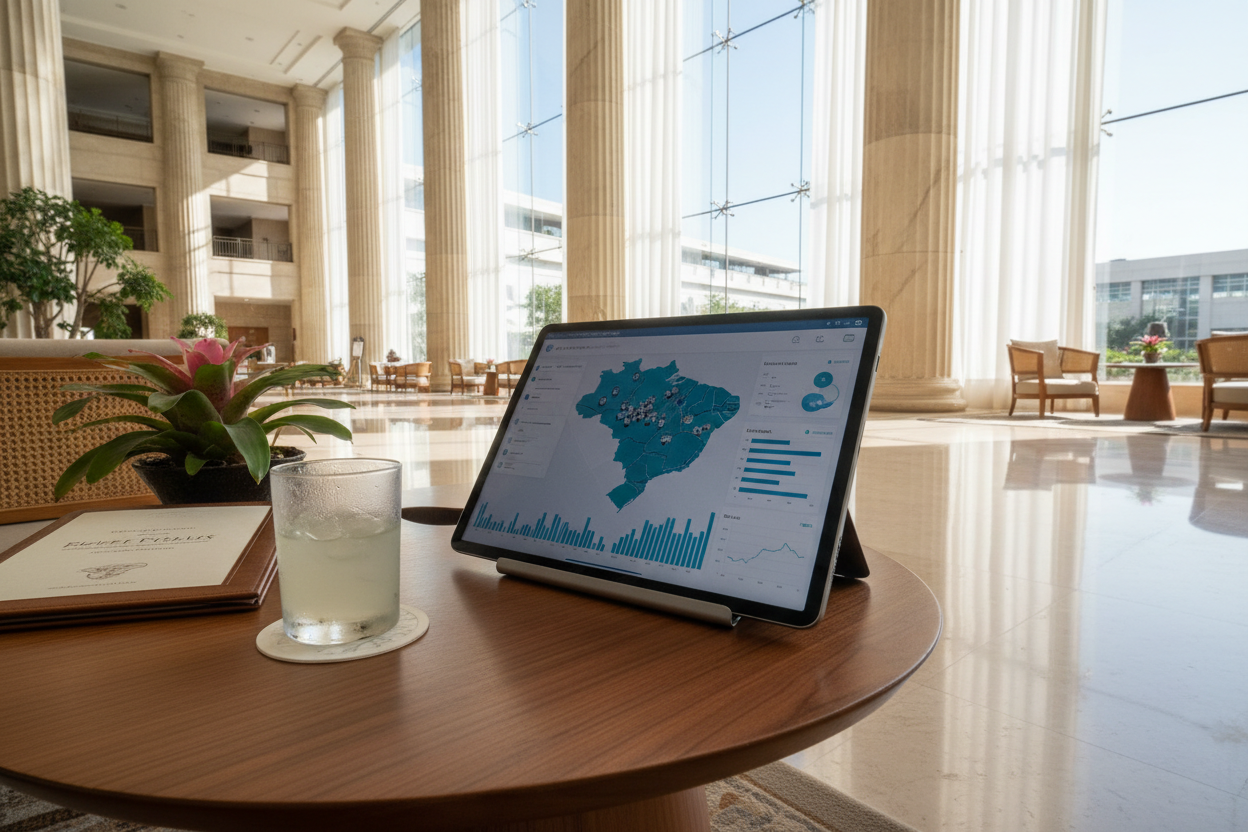
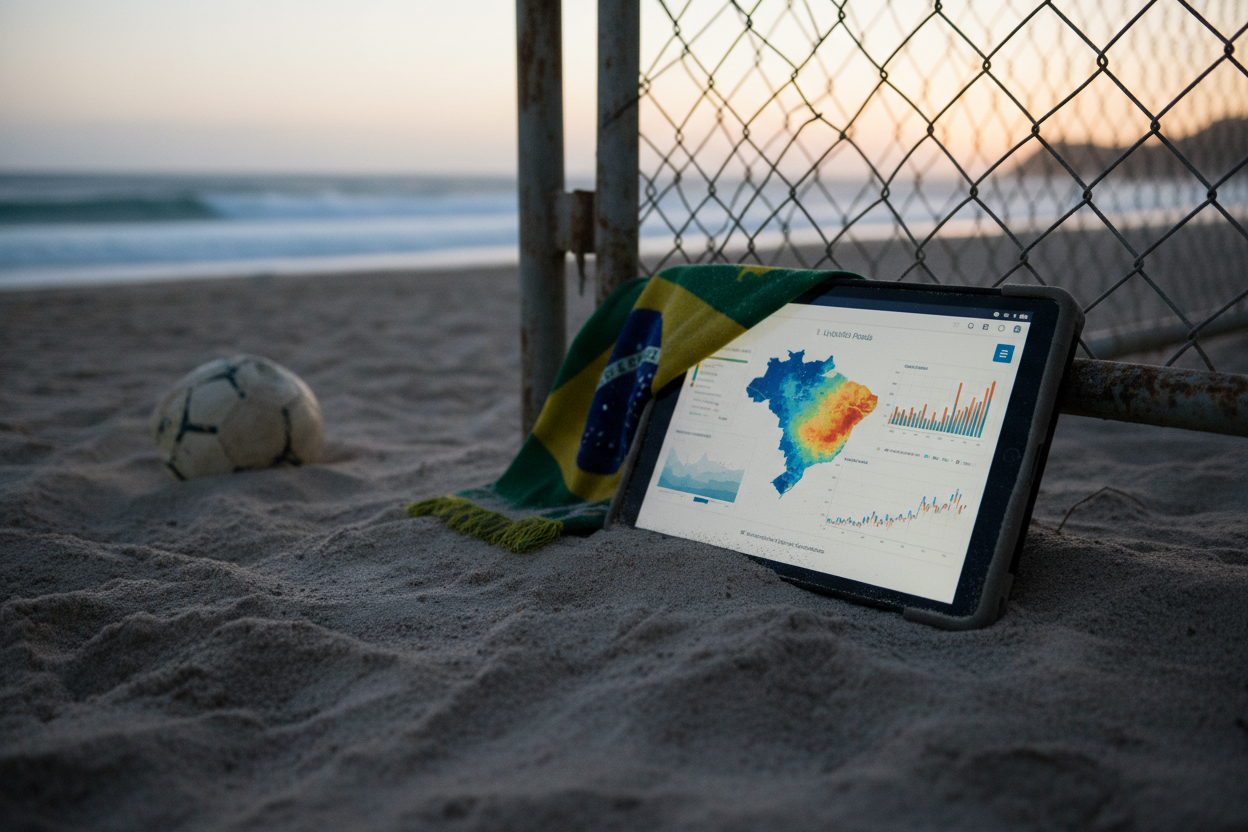
Diving into NonUSDStableMap. com’s visualizations, BRL stablecoin liquidity map data paints a bifurcated landscape. BBRL’s Polygon volumes dwarf BRZ in DeFi contexts, with pool depths enabling $100k and swaps at tight pegs. BRZ shines in P2P volumes, where street-level rates in São Paulo or Rio reflect real-world friction. Prediction models forecast BBRL capturing 60% market share by year-end, driven by enterprise adoption, while BRZ stabilizes at sub-$0.20 amid broader BRL depreciation risks.
Banco Braza BRL Stablecoin (BBRL) Price Prediction 2027-2032
USD price forecasts amid Polygon expansion, market cap growth to $2B, $200M daily volumes, and competition with BRZ
| Year | Minimum Price (USD) | Average Price (USD) | Maximum Price (USD) | YoY % Change (Avg) |
|---|---|---|---|---|
| 2027 | $0.185 | $0.195 | $0.205 | +2.6% |
| 2028 | $0.188 | $0.202 | $0.215 | +3.6% |
| 2029 | $0.192 | $0.210 | $0.228 | +4.0% |
| 2030 | $0.198 | $0.220 | $0.242 | +4.8% |
| 2031 | $0.205 | $0.232 | $0.258 | +5.5% |
| 2032 | $0.215 | $0.247 | $0.275 | +6.5% |
Price Prediction Summary
BBRL is projected to see gradual USD price appreciation from $0.195 in 2027 to $0.247 in 2032, maintaining close peg to BRL amid explosive growth in market cap and volumes on Polygon. Min/max ranges account for bearish depegs and bullish premiums driven by adoption and BRL strength.
Key Factors Affecting Banco Braza BRL Stablecoin Price
- Polygon network integration boosting liquidity and cross-border payments
- Market cap expansion to $2B+ with $200M daily volumes surpassing BRZ
- Regulatory resolutions averting tax threats from Brazilian industry
- Technological improvements enhancing yield flows and DeFi utility
- BRL/USD exchange rate trends favoring appreciation with crypto-driven economy
- Competition dynamics favoring BBRL over BRZ in volume and adoption
Disclaimer: Cryptocurrency price predictions are speculative and based on current market analysis.
Actual prices may vary significantly due to market volatility, regulatory changes, and other factors.
Always do your own research before making investment decisions.
Traders optimizing routes must weigh these metrics: BBRL for scalable DeFi, BRZ for gritty P2P resilience. As Brazil cements its top crypto market status, these stablecoins are rewriting liquidity playbooks.
Practical strategies emerge for those charting BRL stablecoin liquidity maps in real time. Cross-chain arbitrage between BBRL’s Polygon pools and BRZ’s CEX listings offers low-hanging fruit, especially when P2P premiums spike during BRL volatility. Savvy operators monitor exchange depths on NonUSDStableMap. com, timing entries where BBRL pegs tighten below 0.1% while BRZ trades at a 0.5% premium on local ramps. This delta, often overlooked, compounds into meaningful yields over weekly cycles.

P2P Ramps and Exchange Depths: Where BBRL Edges Ahead
Brazil Real stablecoin P2P rates tell a nuanced story. BBRL’s regulated backing minimizes counterparty risks in informal trades, drawing volume from São Paulo’s fintech corridors to Rio’s street markets. Data snapshots reveal BBRL commanding deeper order books on Polygon DEXes, with $500k bids stacking at peg versus BRZ’s thinner $50k layers on Binance P2P. This disparity favors BBRL for larger tickets, yet BRZ persists for micro-transactions under $1k, where speed trumps depth.
Polygon’s low fees- under $0.01 per swap- amplify BBRL’s appeal for high-turnover strategies. Traders layering BBRL into yield farms alongside USDC pairs capture 8-12% APYs, net of impermanent loss. BRZ, tethered more to spot markets, yields steadier 4-6% via lending protocols. My take: BBRL suits aggressive portfolio managers chasing alpha; BRZ anchors conservative hedges against BRL devaluation, which lingers at 5% annualized.
Regulatory headwinds add spice. With 850 companies pushing back on tax proposals, the sector braces for friction. A 15% levy could crimp BRZ trading volume 2026 projections, nudging flows toward BBRL’s compliant rails. Yet, BRZ’s first-mover status in Brazil’s $100B and crypto economy provides a moat, evidenced by its $12,800 daily churn at $0.1895 price point.
Yield Flows and Cross-Border Plays
Beyond binaries, hybrid tactics shine. Pair BBRL with Polygon’s AggLayer for seamless flows to Nigerian NGN stables or Mexican MXN pools, creating triangular arb loops. A Lagos trader might on-ramp NGN, swap to BBRL via Polygon, then remit to Brazil at BRZ-equivalent rates, pocketing 2-3% spreads. NonUSDStableMap. com’s tools overlay these routes, spotlighting BRL DeFi pools depths that hit $10M and TVL in top pairs.
BBRL’s launch catalyzes broader adoption, with Banco Braza eyeing remittances- Brazil’s $4B annual outflow. Volumes could double if integrated into Pix 2.0, Brazil’s instant payment system. BRZ counters via partnerships with local brokers, sustaining volumes amid competition. At $0.1895, BRZ’s micro-volatility- down $0.000040 in 24 hours, ranging $0.1890 to $0.1905- suits scalpers riding intraday fiat swings.
For DeFi pros, the real edge lies in liquidity mining incentives. BBRL pools dangle 20% APR boosts, pulling TVL from BRZ’s stagnant $23M total circulation benchmark. Prediction bands suggest BBRL volumes cresting $200M daily by Q4 2026, while BRZ stabilizes at $50k, contingent on tax outcomes. Risks tilt toward macro: BRL weakness could pressure pegs, but both assets’ 1: 1 reserves mitigate this.
Navigating this landscape demands precision. Platforms like NonUSDStableMap. com equip users with granular maps, from BBRL liquidity Polygon Brazil heatmaps to BRZ P2P scatter plots. Whether scaling DeFi positions or hedging P2P flows, Brazil’s stablecoin duel empowers traders to thrive in volatility’s shadow. The maps don’t lie: opportunity clusters where liquidity converges.