
BRL Stablecoin Liquidity Maps: P2P Ramps and Exchange Depths Across Brazil 2026
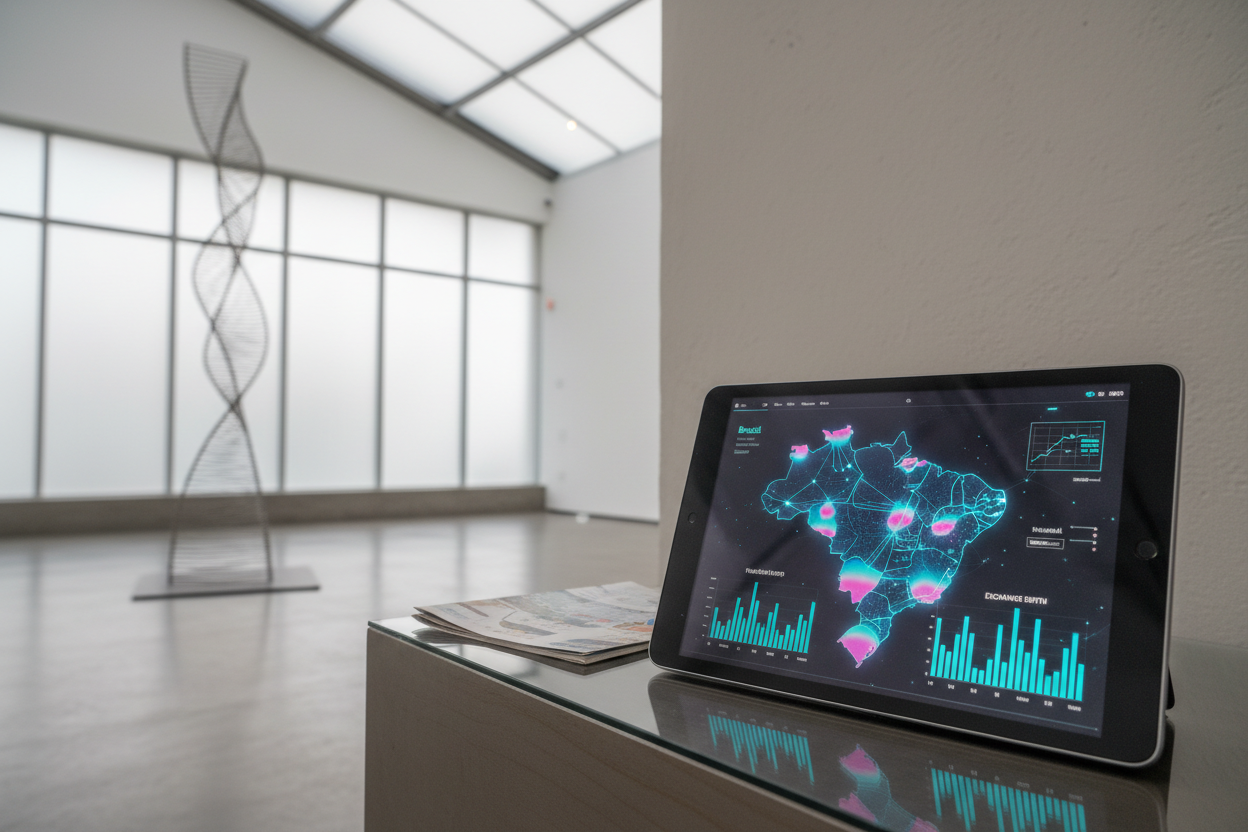
Brazil’s stablecoin market stands at a pivotal juncture in 2026, fueled by explosive growth that saw $89 billion in transactions last year alone, outpacing the entire African continent. With BRL-pegged stablecoins like BRL1, BBRL, and BRLV emerging as viable alternatives to USD-dominant players such as USDT and USDC, traders now demand precise tools to track liquidity. Enter BRL stablecoin liquidity maps: interactive visualizations revealing Brazil P2P BRL ramps, exchange order books, and DeFi pools. These maps are indispensable for arbitrageurs spotting inefficiencies in volatile markets, where Pix integration has supercharged on-ramps and settlements.

Institutional momentum underscores this shift. Braza Bank’s BBRL on the XRP Ledger handled $1 billion in Q3 2025 payments, while BRLV boasts a $40 million reserve fully compliant with Central Bank rules. Trading volumes for BRL-pegged coins hit $906 million in H1 2025, signaling mainstream traction without FX conversion headaches. Yet, USD stablecoins still command 90% of transactions due to superior liquidity; a conservative investor must weigh this dominance against local peg stability.
B3’s Tokenization Push Redefines BRL Stablecoin Infrastructure
Brazil’s B3 stock exchange is set to launch a proprietary BRL-pegged stablecoin by mid-2026, tailored for tokenized asset settlements. This move aligns with broader tokenization plans starting with stocks, potentially injecting billions into on-chain liquidity. From a risk management perspective, B3’s involvement legitimizes the space, curbing the regulatory crackdowns that squeezed algorithmic stables. Fintechs face consolidation around “banked” options like BTG Dol, favoring audited reserves over speculative yields.
Regulatory friction will likely trigger a swift contraction in trading volume as exchanges either restrict access or exit the market.
Plasma’s analysis highlights BRL1’s role, backed 1: 1 by consortium partners Mercado Bitcoin, Foxbit, and Bitso. This enables seamless cross-exchange flows, critical for BRL DeFi liquidity pools Brazil where TVL lags USD counterparts but grows 3x year-over-year. Traders should prioritize platforms bridging Pix for instant BRL-stablecoin swaps, slashing costs in high-inflation environments.
Mapping P2P Ramps: Liquidity Hotspots in Brazil’s Grassroots Economy
P2P platforms power much of Brazil’s Brazil P2P BRL ramps, with El Dorado alone processing over three million operations for 400,000 users by late 2024. These ramps thrive on Pix’s real-time rails, offering premiums that reflect local cash scarcity. A BRL stablecoin liquidity map reveals São Paulo and Rio as epicenters, where bid-ask spreads tighten during remittance peaks, Latin America’s $142 billion market funnels heavily through Brazil.
Conduit’s FX swaps with Braza exemplify evolution: real-time BRL-to-USD settlements bypass banks, ideal for importers hedging volatility. However, liquidity thins outside metros; rural ramps command 5-10% premiums, per platform data. Savvy users layer P2P with CEX for hybrid strategies, arbitraging El Dorado buys against Mercado Bitcoin sells.
Top BRL Stablecoin P2P Platforms
| Platform | Users | Volume (2025) | Pix Support |
|---|---|---|---|
| El Dorado | 400k | $500M | Yes |
| LocalBitcoins | 250k | $300M | Partial |
| Paxful | 150k | $200M | Yes |
Exchange Depths: Decoding Order Books for BRL Stablecoin Trading
Centralized exchanges host 68.7% of volume, with BitZup leading via 0% fees, 800 and coins, and Pix support. Binance and Mercado Bitcoin follow, their BRL stablecoin exchange depths often exceeding $10 million per side for USDT/BRL pairs, yet BRL-pegged books are shallower, averaging $2-5 million. Liquidity maps expose this gap: BRL1 depths cluster on Bitso, while BBRL shines on XRP-integrated venues.
Pix BRL stablecoin trading 2026 amplifies depth during business hours, as instant deposits fuel order flow. Opinion: In a B3-dominated future, expect hybrid CEX-B3 liquidity surpassing pure P2P, but until then, map fragmentation rewards multi-venue monitoring. Volumes could double with tokenization, per MEXC projections, demanding robust risk controls amid 15% BRL swings.
DeFi protocols in Brazil are bridging the gap, with BRL DeFi liquidity pools Brazil attracting yield farmers wary of CEX custody risks. Platforms like those supporting BRL1 offer lending markets where APYs hover 8-12% amid BRL volatility, backed by consortium reserves. Yet TVL remains modest at under $500 million aggregate, per plasma. to insights, dwarfed by USD pools but expanding rapidly through Pix-bridged inflows. Liquidity maps pinpoint high-efficiency pools on Solana and Ethereum L2s, where BRLV incentives draw TVL from traditional savings squeezed by 10% Selic rates.
Arbitrage Strategies: Leveraging Maps for Alpha in Fragmented Markets
Arbitrageurs thrive on discrepancies illuminated by BRL stablecoin liquidity maps. Picture this: El Dorado P2P sells BRL1 at a 2% premium to Mercado Bitcoin’s spot price; a map flags this in real-time, enabling instant Pix-funded buys resold on deeper books. Cross-chain opportunities abound too, like arbitraging BBRL on XRP Ledger against BRLV on Ethereum, netting 1-3% after fees during remittance surges. Conservative tactics involve layering: accumulate via P2P ramps, park in DeFi pools for yield, then exit via CEX depths during B3 pre-launch hype.
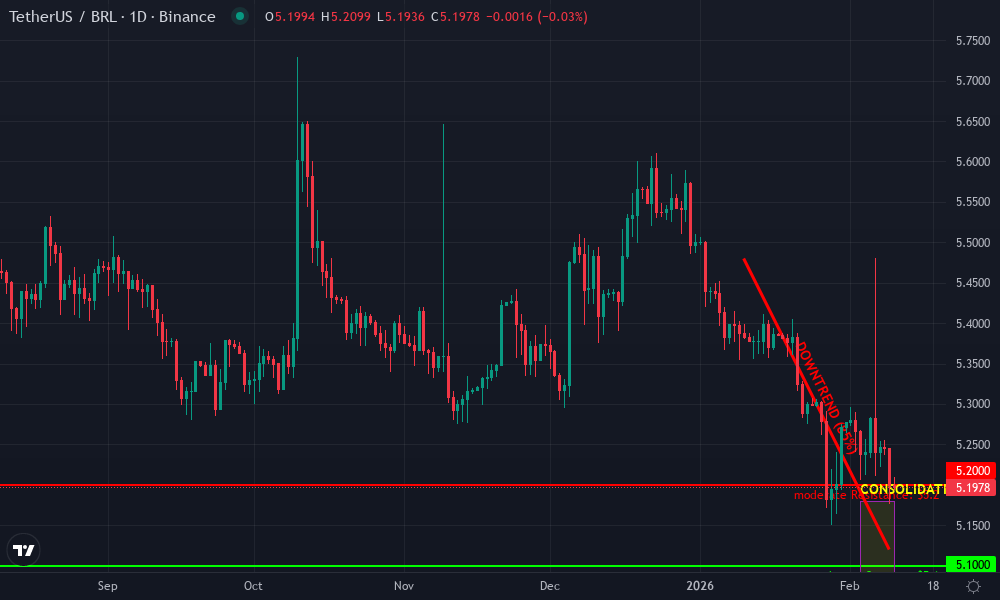
Tether Brazilian Real Technical Analysis Chart
Analysis by Market Analyst | Symbol: BINANCE:USDTBRL | Interval: 1D | Drawings: 5
Technical Analysis Summary
Draw a prominent downtrend line connecting the swing highs from early January 2026 around 5.50 BRL to recent highs near 5.30 BRL in mid-February 2026, using the trend_line tool in red. Add horizontal support at 5.00 BRL (strong, recent lows) and resistance at 5.20 BRL (recent consolidation ceiling). Mark a potential accumulation range from late January to early February between 5.00-5.15 BRL with a rectangle. Place buy entry zone callouts near 5.05-5.10 with low-medium risk, profit targets at 5.25 and 5.40, stop below 4.95. Use arrow_mark_up for bullish MACD crossover signal if emerging, and callout for declining volume pattern suggesting exhaustion. Vertical line at key news date like B3 stablecoin announcement if visible.
Risk Assessment: medium
Analysis: Clear downtrend intact but oversold with volume clues; stablecoin market growth adds volatility from BRL peg competition
Market Analyst’s Recommendation: Consider longs on confirmation above 5.20 with stops below 5.00, align with medium risk tolerance
Key Support & Resistance Levels
📈 Support Levels:
-
$5 – Strong multi-touch low from late Jan-Feb 2026, volume spike confirmation
strong -
$5.1 – Recent bounce level, current price area
moderate
📉 Resistance Levels:
-
$5.2 – Consolidation ceiling, prior swing high early Feb
moderate -
$5.4 – Mid-Jan downtrend test level
weak
Trading Zones (medium risk tolerance)
🎯 Entry Zones:
-
$5.08 – Bounce from strong 5.00 support with volume divergence, potential reversal in stablecoin context
medium risk -
$5.15 – Break above minor resistance for continuation long
low risk
🚪 Exit Zones:
-
$5.25 – Initial profit target at recent resistance
💰 profit target -
$5.45 – Extended target if uptrend confirms
💰 profit target -
$4.95 – Below key support invalidation
🛡️ stop loss
Technical Indicators Analysis
📊 Volume Analysis:
Pattern: declining on downside, spikes on lows
Volume exhaustion on recent drops suggests selling climax, potential bottom
📈 MACD Analysis:
Signal: bearish but flattening histogram
MACD line approaching signal from below, watch for bullish crossover
Applied TradingView Drawing Utilities
This chart analysis utilizes the following professional drawing tools:
Disclaimer: This technical analysis by Market Analyst is for educational purposes only and should not be considered as financial advice.
Trading involves risk, and you should always do your own research before making investment decisions.
Past performance does not guarantee future results. The analysis reflects the author’s personal methodology and risk tolerance (medium).
Risk management is paramount. BRL’s 15% annual swings amplify slippage in shallow books; always size positions below 5% of mapped depth. Regulatory headwinds favor banked stables, so prioritize BRL1 and BRLV over unproven algorithmics post-crackdown. Pix integration mitigates timing risks, but monitor Central Bank updates as 2026 fintech consolidation accelerates.
Pix-Powered Trading: The Backbone of 2026 BRL Stablecoin Flows
Pix BRL stablecoin trading 2026 represents the fusion of fiat efficiency and crypto speed. BitZup’s 0% fees and 800 and coins exemplify how exchanges embed Pix for sub-second deposits, swelling order books during payroll cycles. Data shows 68.7% CEX dominance stems from this seamlessness, outpacing P2P’s grassroots appeal. For investors, maps reveal Pix hotspots correlating with BRL strength, ideal for timing entries before B3’s stablecoin floods tokenized stocks with fresh liquidity.

B3’s mid-year launch could centralize depths, blending stock tokenization with stablecoin settlements and eclipsing fragmented ramps. Early movers positioning in BRL1 pools stand to capture spillover TVL, but expect volatility as $89 billion transaction precedents scale. Platforms like NonUSDStableMap. com equip users with granular visuals: color-coded depths, heatmaps of P2P premiums, and pool TVL trackers. In Brazil’s maturing ecosystem, these tools transform hunch-based trading into data-driven precision, safeguarding capital while chasing regional alpha.