Pick the right local stablecoin
Non-USD stablecoins remain niche and highly context-specific. They only make sense when you have a direct counterparty in that region or a specific regulatory need. Using a local currency peg like MXN, BRL, or NGN reduces FX friction for the recipient, but it introduces fragmentation risks that USD stablecoins avoid.
Before choosing a local peg, verify two things: liquidity depth and regulatory status. Most non-USD stablecoins trade on regional exchanges with thin order books. A small transfer might slip through, but larger payments can suffer significant slippage or temporary depegs during volatility. Additionally, regulations in jurisdictions like Brazil or Mexico are evolving rapidly; ensure the stablecoin issuer is compliant with local financial authority guidelines to avoid frozen funds.

Match the stablecoin to your recipient's actual usage, not just your own preference. If your counterparty in Mexico uses USDT for everything, sending MXN-pegged tokens may require them to swap immediately, incurring extra fees. Conversely, if they are a local business that needs to settle payroll in pesos, a compliant local stablecoin streamlines their accounting. Prioritize the path of least resistance for the receiver.
When liquidity is low, stick to USD stablecoins (USDT, USDC) and let the recipient handle the local currency conversion via a regulated exchange. This shifts the FX risk to a deeper market rather than a thin stablecoin pool. Only use local stablecoins when you have confirmed, high-volume demand for that specific peg in your target market.
Set up a compliant wallet
Choosing a wallet for non-USD stablecoins requires more than just finding a download link. You need a self-custody solution that supports the specific blockchain where your target stablecoin lives and can handle local identity verification (KYC) requirements. This ensures you can legally move funds across borders without triggering compliance flags.
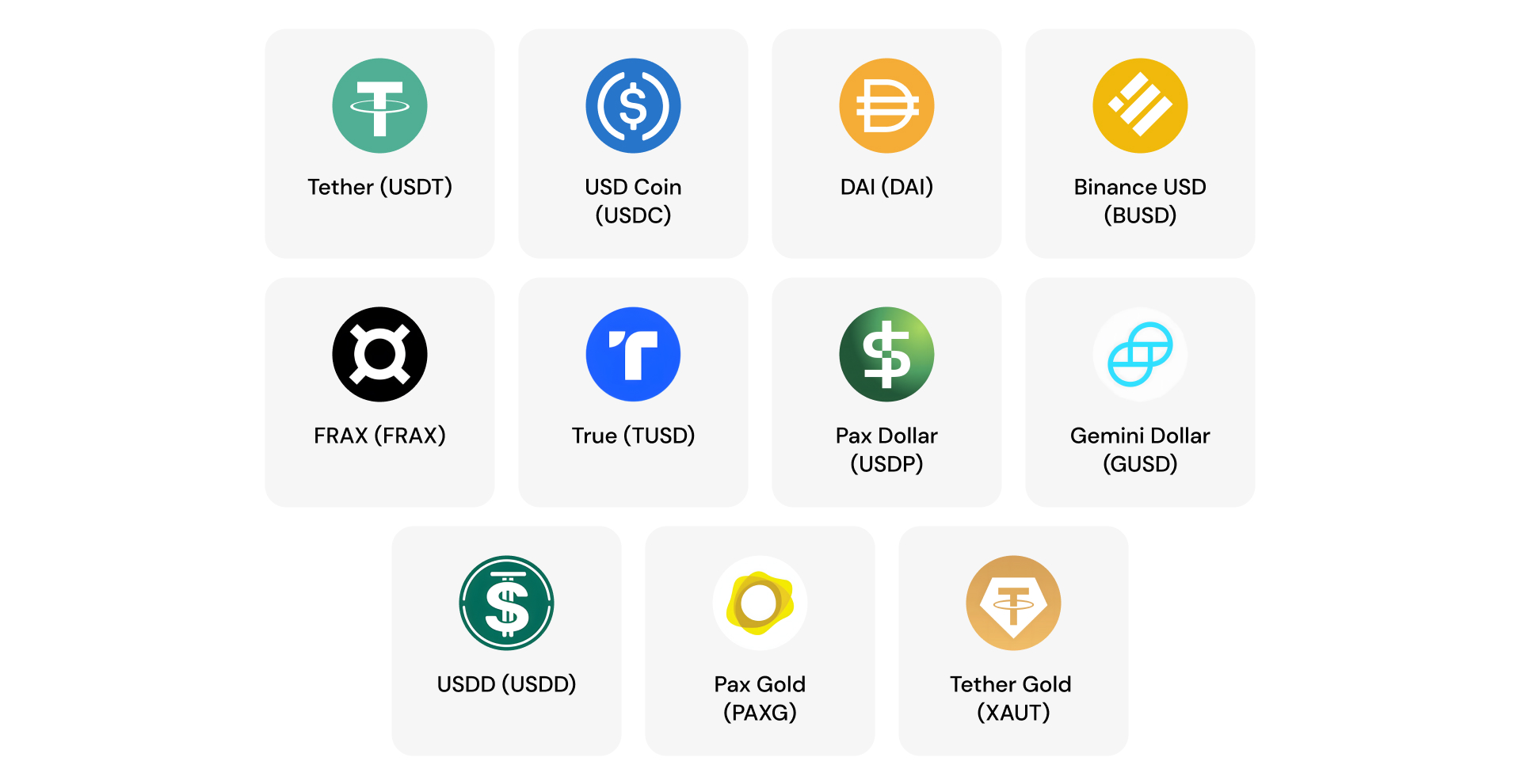
Non-USD stablecoins like EURC (Euro) or BRZ (Brazilian Real) often live on specific networks rather than Ethereum mainnet. Check if your wallet supports the relevant Layer 2 or alternative chain. For example, Polygon hosts over 30 non-USD stablecoins, making it a practical choice for cross-border payments in LATAM, APAC, and EMEA regions.
Select a wallet that prioritizes security and offers clear KYC pathways if required by your jurisdiction. MetaMask and Trust Wallet are widely used for their multi-chain compatibility. Ensure the wallet allows you to import custom token contracts if the stablecoin isn't automatically recognized, preventing you from sending funds to the wrong address.

Many wallets now integrate third-party KYC providers to comply with local regulations. You will likely need to upload a government ID and complete a biometric scan. This step is crucial for accessing higher transaction limits and ensuring your wallet isn't flagged for suspicious activity when receiving cross-border payments.

Link a bank account or debit card to buy the non-USD stablecoin directly within the wallet, or transfer it from an exchange. Use a reputable on-ramp service to convert your fiat currency into the stablecoin. Always verify the network fee (gas) before confirming the transaction to avoid excessive costs.
Before moving significant funds, send a small amount to another wallet or a testnet address. This confirms that your wallet is correctly configured to handle the specific stablecoin and that your KYC status is fully active. It also helps you understand the transaction time and fees associated with the chosen network.
Once your wallet is set up, you are ready to receive and send non-USD stablecoins. Keep your seed phrase secure and never share it with anyone. For ongoing compliance, monitor any updates from your local financial authority regarding digital asset regulations.
Fund your account with local fiat
Converting local currency into a non-USD stablecoin usually involves a two-step process: depositing fiat into a regulated exchange, then swapping it for the target asset. Because these tokens are less common than USDT or USDC, your options depend heavily on your region.
1. Deposit local currency
Start by funding an account with a regulated exchange that lists your target stablecoin. In Europe, platforms compliant with MiCA often support direct EUR deposits via SEPA. In Brazil, many users fund accounts using PIX, a real-time payment system that makes buying BRZ (Brazilian Real stablecoin) nearly instant. Check if your local bank offers direct crypto integration or if you need a third-party payment processor.
2. Swap fiat for the stablecoin
Once your fiat balance is confirmed, navigate to the trading pair for your chosen stablecoin. For example, search for EUR/USDT or EUR/DAI if you are in Europe, or BRL/BRZ in Brazil. Execute a market order for immediate settlement or a limit order if you prefer a specific price. Always verify the network fee before confirming, as some exchanges charge higher spreads for non-USD pairs.
3. Transfer to your wallet
After the swap, withdraw the stablecoin to your personal wallet. Ensure you select the correct blockchain network (e.g., Ethereum, Polygon, or Solana) to avoid losing funds. This step completes the conversion from local fiat to on-chain value, ready for cross-border use.
Send the payment securely
Transferring value across borders with a non-USD stablecoin requires selecting the right network to balance speed, cost, and acceptance. While Ethereum Mainnet offers deep liquidity, its transaction fees often outweigh the benefits for small-to-medium transfers. Instead, choosing a high-throughput blockchain like Polygon or Solana can reduce fees to fractions of a cent while maintaining near-instant settlement times.
1. Select the recipient’s supported network
Before initiating a transfer, confirm which blockchain network the recipient can access. Not all non-USD stablecoins are available on every chain. For example, the Brazilian Real (BRZ) is widely supported on Polygon, which hosts over 30 non-USD stablecoins across LATAM, APAC, and EMEA [src-serp-1]. If your recipient uses a wallet that only supports Ethereum, you may face higher gas fees or need a bridge, which introduces additional risk and complexity.

Pick a network based on the recipient’s wallet capabilities. Polygon and Solana are preferred for low fees and speed. Avoid Ethereum Mainnet unless the recipient specifically requires it for DeFi integration.
Ensure the specific non-USD stablecoin (e.g., EURC, BRZ, or ARST) is deployed on your chosen network. Use official project websites or block explorers to verify the contract address to avoid sending funds to a fake token.
Input the recipient’s wallet address and select the correct network. Double-check the address character-by-character. A single typo on a blockchain is irreversible, and funds sent to the wrong network may be lost permanently.
Review the network fee (gas) and the total amount. Confirm the transaction in your wallet. Monitor the block explorer to ensure the transaction is confirmed before considering the payment complete.
2. Manage network fees and slippage
Even on low-cost networks, fees fluctuate based on network congestion. Most wallets display an estimated fee before you confirm. If the fee seems unusually high, wait for a quieter period or switch to a Layer 2 solution if your stablecoin supports it. Additionally, be aware of slippage if you are swapping currencies on the fly; setting a tight slippage tolerance protects you from significant price changes during the transfer window.
3. Confirm receipt and reconcile
Once the transaction is confirmed on-chain, the funds should appear in the recipient’s wallet almost instantly. Provide the recipient with the transaction hash (TXID) as proof of payment. This hash allows both parties to verify the transfer on a public block explorer, creating an immutable record that can be used for accounting or dispute resolution.
Avoid common transfer mistakes
The easiest mistake with Use Non-USD Stablecoins for Cross-Border Payments is changing too much at once. Rename devices, move networks, update firmware, or adjust permissions one at a time. When setup fails, the last change should be obvious enough to undo without rebuilding the whole configuration. Do not treat a successful app screen as the final test. Use the physical control, the app, and any connected automation to confirm the setup works from every path the reader will actually use.
The simplest way to use this section is to keep the setup small, verify each change, and record the stable configuration before adding optional accessories.
Check your compliance checklist
Before finalizing the transaction, run through this compliance verification. Non-USD stablecoin payments operate in a fragmented regulatory environment, so local rules vary significantly. A transfer that clears in one jurisdiction may trigger reporting requirements in another.
Start by confirming the recipient’s jurisdiction allows the specific token. For example, the European Union’s MiCA framework provides clear rules for Euro-backed assets, while other regions may restrict non-local fiat tokens entirely. Verify that your payment processor supports the specific non-USD stablecoin you are using.
Next, check your own tax obligations. Cross-border transfers of non-USD assets can sometimes trigger capital gains events if the token’s value fluctuates against your home currency during the transfer window. Keep records of the exchange rate at the moment of transfer for accurate reporting.
No comments yet. Be the first to share your thoughts!