
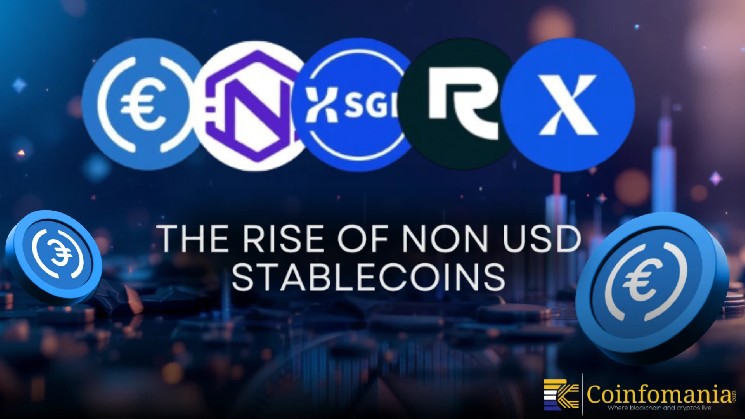
Non-USD stablecoins in 2026 budget
The market for non-USD stablecoins has shifted from niche experimentation to mainstream utility. Circulating supply reached $2 billion in 2026, growing 42% in just the first half of the year. This surge signals that regional currencies are no longer just alternatives to the dollar—they are becoming primary settlement layers for local trade and savings.
EURC, GBPm, and JPY-backed assets are leading this charge. They offer distinct advantages for users who want to avoid FX conversion fees or hedge against local inflation. However, adopting them requires understanding the specific tradeoffs in liquidity, regulatory backing, and platform support.
EURC: The European Standard
EURC tracks the Euro with a 1:1 peg, making it the go-to stablecoin for cross-border payments within the EU. It is fully backed by cash and short-term government securities in regulated European banks. For merchants and freelancers dealing in Euros, EURC eliminates the need for traditional SWIFT transfers, reducing settlement times from days to minutes. The main tradeoff is that its liquidity is concentrated on European-focused exchanges, which may limit immediate exit options in regions with less EU infrastructure.
GBPm: Sterling’s Digital Counterpart
GBPm provides a digital representation of the British Pound, catering to the UK’s robust fintech sector. It is designed for high-frequency trading and everyday transactions where speed and low cost are critical. Unlike traditional bank transfers, GBPm transactions settle instantly on-chain. Users benefit from lower transaction fees compared to card processing or wire transfers. However, the regulatory landscape for GBP-backed assets in the UK is evolving, so users should verify the issuer’s compliance status with the Financial Conduct Authority (FCA) before large deployments.
JPY-backed Assets: Hedging Against Yen Volatility
JPY-backed stablecoins offer a digital hedge against the volatility of the Japanese Yen. While the Yen has shown resilience, its long-term value fluctuates based on global monetary policy. These assets allow users to hold YP-denominated value on-chain without relying on traditional banking rails. They are particularly useful for Japanese investors participating in global DeFi protocols. The key consideration is the custodian’s transparency; ensure the issuer publishes regular attestation reports to confirm 1:1 backing by Japanese Yen reserves.
Comparing the Options
| Feature | EURC | GBPm | JPY-backed |
|---|---|---|---|
| Primary Use | EU cross-border payments | UK fintech & trading | Japanese DeFi & hedging |
| Backing | Cash & Govt Securities | Cash & Reserves | Cash & Reserves |
| Liquidity | High in EU | High in UK | Moderate globally |
| Regulatory | MiCA Compliant | FCA Oversight | JFSA Compliant |
Choosing the right non-USD stablecoin depends on your geographic location and specific financial goals. For EU residents, EURC offers the most seamless integration. For UK-based users, GBPm provides a direct digital pound experience. For those seeking exposure to Yen-denominated value without holding physical currency, JPY-backed assets offer a secure on-chain alternative. Always verify the issuer’s regulatory status and reserve transparency before committing significant funds.
Shortlist real options
Non-USD stablecoins have moved from niche experiments to a $2 billion market segment in 2026. The circulating supply for these assets has surged by over 42% this year alone, driven by traders and institutions seeking to hedge against local currency volatility or access specific regional liquidity pools. While the US dollar remains dominant, the growth trajectory for euro, pound, and yen-backed tokens is outpacing traditional dollar-pegged assets.
The following comparison breaks down the three strongest contenders currently capturing market share. Each asset serves a distinct geographic or functional need, offering different trade-offs in liquidity, regulatory backing, and network availability. Understanding these differences is essential for choosing the right tool for cross-border payments or regional DeFi strategies.
| Asset | Peg | Primary Networks | Best Use Case |
|---|---|---|---|
| EURC | Euro (EUR) | Ethereum, Polygon, Arbitrum | Eurozone settlements and DeFi collateral |
| GBPm | British Pound (GBP) | Ethereum, Solana | UK remittances and GBP liquidity |
| JPY-backed | Japanese Yen (JPY) | Ethereum, BNB Chain | Asia-Pacific arbitrage and yen exposure |
EURC: The Euro Standard
EURC anchors its value to the euro, providing a direct on-chain representation of European currency. It is particularly useful for businesses operating within the Eurozone who need to settle invoices without converting through a USD intermediary. This reduces exchange rate friction and settlement times. The asset is widely available on major Layer 2 networks, making it a staple for European DeFi protocols and cross-border B2B payments.
GBPm: Pounds on Chain
GBPm addresses the specific needs of the UK market and traders holding British pounds. By providing a stable, programmable version of the pound, it facilitates faster domestic transfers and integrates with the growing UK digital finance ecosystem. Its presence on high-throughput networks like Solana allows for low-cost, high-speed transactions, making it ideal for remittances and micro-payments where traditional banking fees would otherwise erode value.
JPY-Backed Assets: Yen Liquidity
Japanese yen-backed stablecoins are gaining traction as Asian markets seek greater integration with global blockchain infrastructure. These assets allow users to hold yen exposure on-chain without relying on traditional bank accounts. They are increasingly used for arbitrage between Asian and Western exchanges, as well as for settling trades in the Asia-Pacific region. While liquidity is still developing compared to EURC, adoption is accelerating among institutions looking to diversify away from dollar-centric systems.
Inspect the expensive parts
Use this section to make the Non-USD Stablecoins decision easier to compare in real life, not just on paper. Start with the reader's actual constraint, then separate must-have requirements from details that are merely nice to have. A practical choice should survive normal use, maintenance, timing, and budget. If a recommendation only works in an ideal situation, call that out plainly and give the reader a fallback path.
-
Verify the basicsConfirm the core specs, condition, and fit before comparing extras.
-
Price the downsideLook for the repair, maintenance, or replacement cost that would change the decision.
-
Compare alternativesCheck at least two comparable options before treating one listing as the benchmark.
Ownership costs go beyond the buy price
A stablecoin’s purchase price is just the entry fee. The real cost comes from what you lose while holding it. EURC, GBPm, and JPY-backed assets track currencies that often pay interest or undergo inflation, creating a gap between the token’s price and its actual purchasing power.
When a fiat currency devalues, the stablecoin’s peg usually holds, but the asset it represents is worth less. You are holding a token that claims to equal one euro, but that euro buys fewer groceries than it did last year. This is the hidden tax of non-USD stablecoins: you are exposed to the monetary policy of the issuing region.
Maintenance surprises and fee structures
Unlike USDT or USDC, which have become commoditized with low or zero fees for large transfers, regional stablecoins often carry higher friction. Some issuers charge maintenance fees for wallets or exchanges that do not meet minimum volume thresholds. Others apply wider spreads when you convert back to fiat, effectively taxing your exit.
Always check the issuer’s fee schedule before depositing significant capital. A "free" transfer on one platform might come with a 0.5% spread on the other side. For small balances, these fees can eat 5-10% of your principal over a few months, turning a seemingly stable asset into a losing proposition.
When cheap entry becomes expensive
The math changes quickly if you hold for more than a year. If the euro depreciates by 3% against the dollar, your EURC is worth 3% less in global terms, even if the peg holds perfectly. Add a 1% annual maintenance fee, and you have lost 4% of your value without moving a finger.
This is why non-USD stablecoins are best used for local transactions, not long-term savings. If you need to pay a vendor in London, GBPm is efficient. If you need to store value for a rainy day, the compounding costs of currency drift and fees make it a poor vault. Treat these tokens as tools for spending, not assets for hoarding.


As an Amazon Associate, we may earn from qualifying purchases.
No comments yet. Be the first to share your thoughts!