
Non-usd stablecoins face distinct limits to account for
Non-USD stablecoins do not follow the same development path as their US dollar counterparts. Their growth is jointly determined by regional regulatory environments and local infrastructure, creating a fragmented landscape rather than a unified global standard. While US dollar stablecoins dominate the market—accounting for roughly 97% of fiat-backed stablecoins—non-USD assets serve specific, localized needs that global players often overlook.
The primary constraint for non-USD stablecoins is regulatory fragmentation. Unlike the US, where federal clarity is slowly emerging, regions like the EU, UK, and APAC have distinct legal frameworks. For example, the EU’s MiCA regulation sets strict reserve and issuance rules that apply uniformly across member states, whereas other regions may lack clear guidelines entirely. This regulatory uncertainty discourages large-scale institutional adoption outside of specific jurisdictions.
Liquidity and integration are also significant hurdles. Non-USD stablecoins often operate within closed ecosystems, such as specific blockchain networks or regional payment rails. For instance, Polygon hosts over 30 non-USD stablecoins for LATAM, APAC, and EMEA, but these assets rarely achieve deep liquidity on global exchanges. This limits their utility for cross-border transactions, confining them mostly to local use cases like remittances or local commerce.
Despite these constraints, non-USD stablecoins are gaining traction in niches where US dollar assets are impractical or restricted. In countries with high inflation or capital controls, local stablecoins offer a more accessible alternative to traditional banking. However, for most institutional investors, the lack of regulatory clarity and limited liquidity remains a barrier to widespread adoption.
Non-usd stablecoins choices that change the plan
Choosing a non-USD stablecoin requires evaluating regional regulatory alignment, liquidity depth, and reserve transparency. While US dollar-backed assets dominate global volume, local currency tokens offer distinct advantages for regional commerce and cross-border settlements where USD conversion costs are prohibitive. The decision hinges on whether the primary use case prioritizes global liquidity or local purchasing power.
Comparison of Key Attributes
The table below compares three common non-USD stablecoin models against USD benchmarks. Note that regulatory status and reserve composition vary by jurisdiction and issuer.
Liquidity and Slippage
Non-USD stablecoins often trade on smaller liquidity pools compared to USDT or USDC. This can result in higher slippage during large transactions. For institutional players, this means evaluating the depth of order books on local exchanges versus global platforms. In regions like Latin America or Southeast Asia, local stablecoins may offer better rates for domestic payments than converting through USD.
Regulatory and Reserve Transparency
Regulatory frameworks such as the EU’s MiCA provide clear guidelines for euro-backed stablecoins, requiring regular audits and reserve segregation. In contrast, non-USD stablecoins in jurisdictions with less developed crypto laws may lack standardized reporting. Investors should verify whether reserves are held in cash, government bonds, or commercial paper, as this impacts risk during market stress.
Use Case Fit
For cross-border trade within a specific region, a local stablecoin reduces FX conversion fees. However, for global treasury management or DeFi collateral, USD assets remain the standard due to their widespread acceptance. The choice is not about superiority but about alignment with the operational geography of the user.
Choose the next step
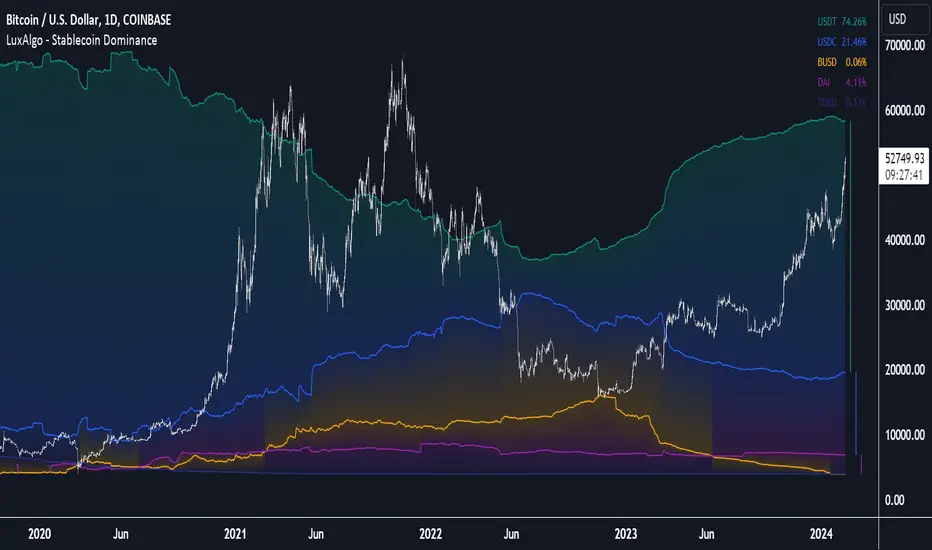
Stablecoin Dominance works best as a clear sequence: define the constraint, compare the realistic options, test the tradeoff, and choose the path with the fewest hidden costs. That order keeps the advice usable instead of decorative. After each step, pause long enough to check whether the recommendation still fits the reader's actual situation. If it depends on perfect timing, unusual access, or a best-case budget, include a simpler fallback.
Spotting Weak Options in Non-USD Stablecoins
Non-USD stablecoins face distinct regulatory and liquidity hurdles that often mask deeper structural risks. While USD assets dominate with 97% market share among fiat-backed tokens, non-USD alternatives like EUR or JPY pairs operate in fragmented jurisdictions [src-1]. This fragmentation creates "weak options"—coins that appear viable but lack the reserve transparency or liquidity depth of major USD peers.
When evaluating these assets, look for three common pitfalls. First, check the reserve composition. Many non-USD coins hold mixed assets rather than pure cash equivalents, introducing currency risk. Second, verify on-chain liquidity. Low trading volume on decentralized exchanges can lead to severe slippage during market stress. Finally, assess regulatory clarity. Coins issued in jurisdictions without clear stablecoin frameworks carry higher compliance risks for institutional adoption.
The key is distinguishing between genuine regional utility and speculative tokens. Focus on coins with audited, localized reserves and active institutional backing. Avoid assets that rely on algorithmic mechanisms or opaque custodians, as these are prone to de-pegging events.
Non-usd stablecoin: what to check next
Non-USD stablecoins are gaining traction as institutional players seek localized on-chain settlement. While the US dollar remains the dominant reserve asset, regional currencies are emerging to solve specific cross-border frictions.
These questions clarify that while non-USD assets are not replacing the dollar, they fill a distinct utility gap for regional liquidity and hedging.
No comments yet. Be the first to share your thoughts!