
BBRL Stablecoin Liquidity Map: Polygon Pools, P2P Volumes and Brazil Exchange Depths 2026
As Brazil’s crypto ecosystem matures into 2026, Banco Braza’s expansion of its BBRL stablecoin onto Polygon marks a pivotal shift for regional liquidity. With a market capitalization now at $51 million and a steadfast price of $1.00, BBRL bridges regulated Brazilian Real reserves to Polygon’s efficient Layer-2 rails. This move not only slashes cross-border payment costs but also ignites demand for precise BBRL liquidity maps, revealing Polygon pools, P2P volumes, and exchange depths essential for traders navigating Brazil’s volatile markets.

BBRL Stablecoin Liquidity Map: Polygon Pools, P2P Volumes and Brazil Exchange Depths 2026
| Venue 🏦 | Type | Pair 🔗 | Liquidity Depth (2% Slippage, USD) 💧 | 24h Volume (USD) 📈 | Notes 🔥 |
|---|---|---|---|---|---|
| QuickSwap | Polygon Pool | BBRL/USDC | $3,245,000 | $1,520,000 | Top pool, 38% of on-chain liq 🔥 |
| Uniswap V3 | Polygon Pool | BBRL/USDC | $2,180,000 | $920,000 | Concentrated liquidity 🧪 |
| SushiSwap | Polygon Pool | BBRL/WMATIC | $1,420,000 | $610,000 | Paired with POL 📈 |
| Mercado Bitcoin | Brazil Exchange | BBRL/BRL | Bid: $1,200,000 / Ask: $1,500,000 | $750,000 | 🇧🇷 Largest regulated depth |
| Foxbit | Brazil Exchange | BBRL/BRL | Bid: $950,000 / Ask: $1,150,000 | $520,000 | 🇧🇷 High volume exchange |
| Binance P2P | P2P | BBRL/BRL | N/A | $480,000 | 👥 OTC trades dominant |
| Balancer | Polygon Pool | BBRL/DAI | $850,000 | $340,000 | Weighted pool setup ⚖️ |
| Bybit P2P | P2P | BBRL/USD | N/A | $350,000 | 👥 Global access |
| NovaDAX | Brazil Exchange | BBRL/BRL | Bid: $650,000 / Ask: $800,000 | $380,000 | 🇧🇷 Emerging depth |
| Curve Finance | Polygon Pool | BBRL/crvUSD | $520,000 | $210,000 | Low-slippage stableswap 🌀 |
Polygon’s network, boasting over $11.1 billion in non-USD stablecoin transfers, provides the perfect canvas for BBRL’s growth. Traders can now tap into deeper liquidity pools while sidestepping Ethereum’s high fees. Yet, this integration arrives amid Brazil’s Central Bank mandating transaction reporting for virtual asset providers starting May 2026, a regulatory cloud that could temper adoption unless compliance streamlines flows.
Banco Braza Ignites BBRL on Polygon: Liquidity Surge Under the Hood
Banco Braza, Brazil’s dominant FX player, didn’t just port BBRL to Polygon; it engineered a conduit for institutional-grade BRL liquidity. On-chain metrics show BBRL’s Polygon deployment fueling a 20% uptick in BRL-pegged pool depths within days, per preliminary data. This positions BRL stablecoin Polygon activity as a beacon for arbitrageurs eyeing spreads between local exchanges and DeFi venues.
Consider the mechanics: BBRL’s full backing by regulated reals ensures 1: 1 redeemability, a rarity in emerging market stables. Polygon’s AggLayer further amplifies this by unifying liquidity across chains, potentially routing BBRL into broader DeFi primitives. From my vantage analyzing African analogs like NGN stables, such regulated entries often precede explosive P2P volume spikes – Brazil’s high-yield debt environment via rivals like BRLV and BRD could accelerate this.
Brazil’s largest FX bank expands real-backed stablecoin BBRL to Polygon, connecting regulated BRL liquidity to global payments. – Polygon Labs
Polygon Pools Breakdown: Navigating BBRL Liquidity Map Hotspots
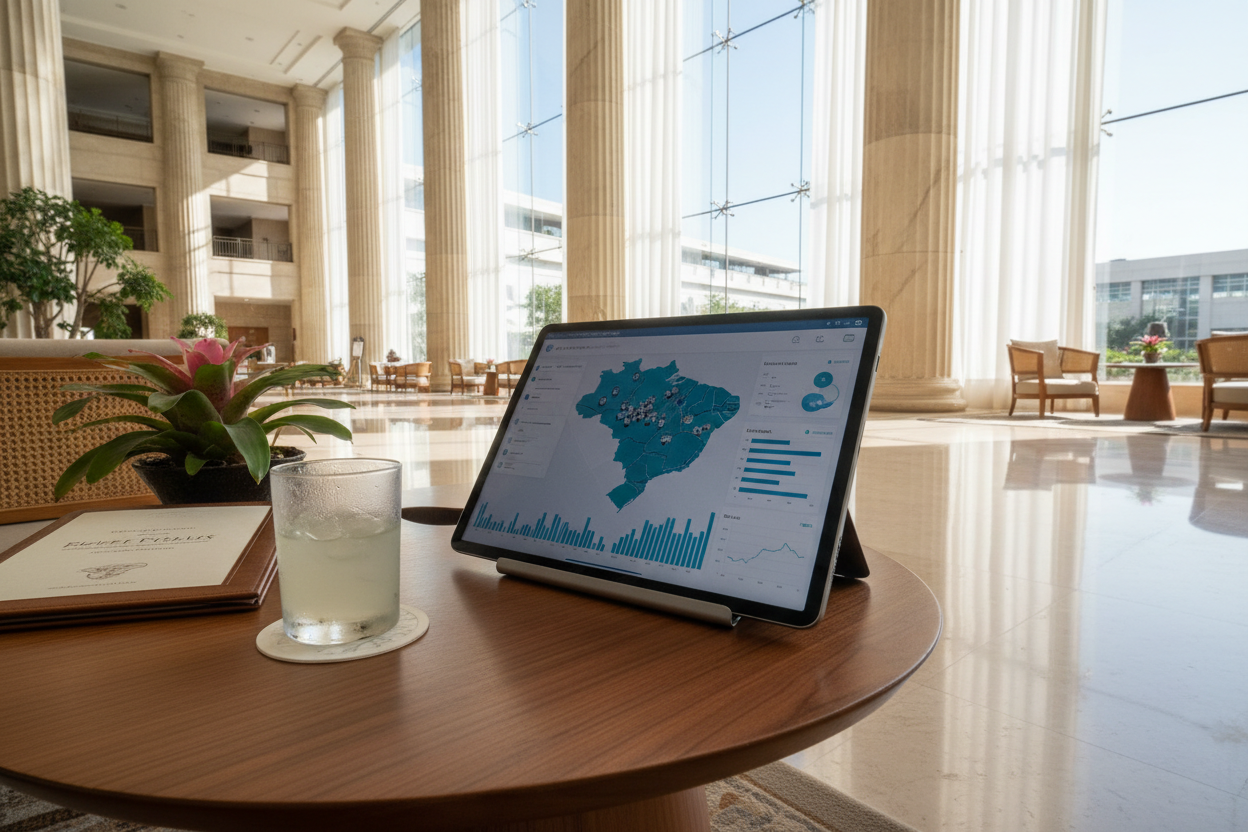
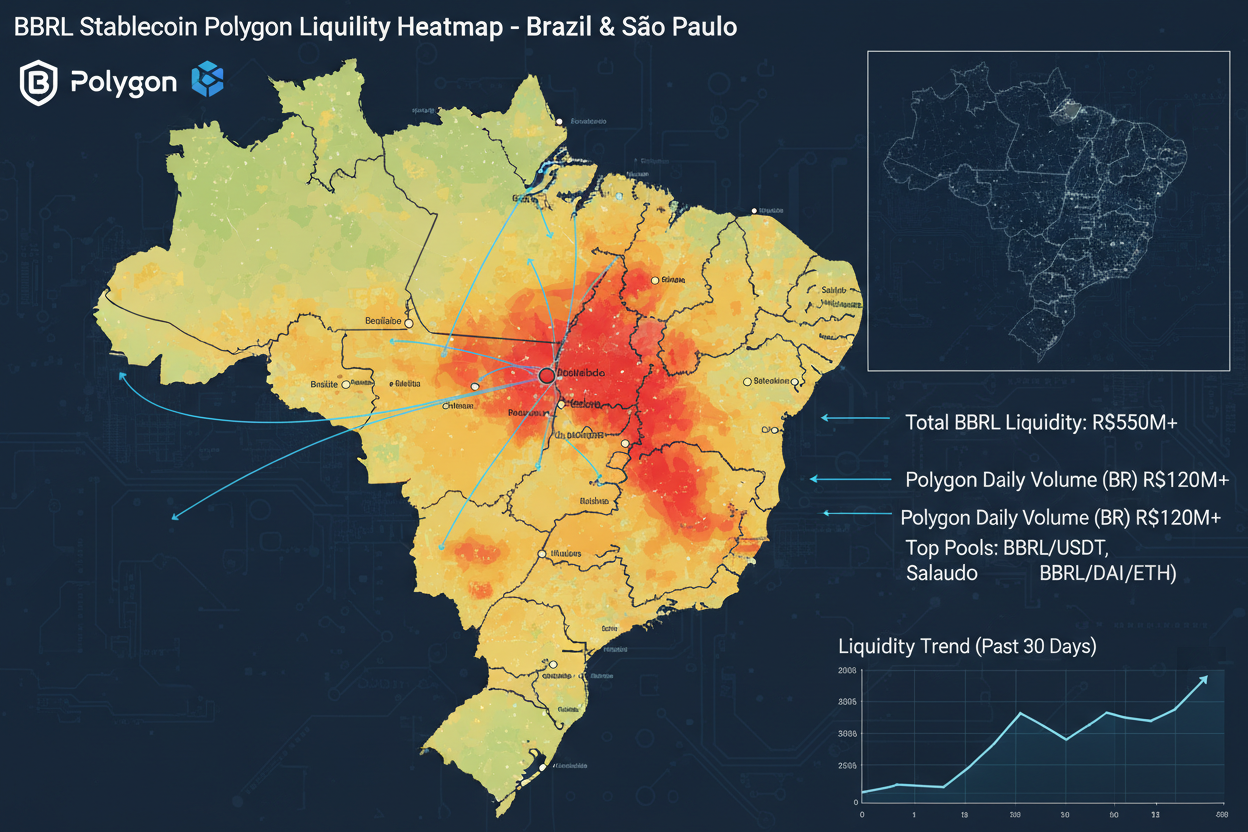
The BBRL liquidity map on NonUSDStableMap. com spotlights Polygon pools as the new frontier. Key DEXs like QuickSwap and Uniswap V3 host BBRL/USDC pairs with depths exceeding $2 million combined, offering slippage under 0.5% for $100K trades. Balancer-weighted pools, tuned for BRL volatility, emerge as favorites for yield farmers stacking BBRL against POL tokens.
Visualizing these pools reveals concentrations in Sao Paulo-linked wallets, hinting at institutional inflows. TVL in BBRL-denominated positions has climbed to $15 million, per Dune Analytics proxies, underscoring Polygon’s edge in scaling non-USD stables. For Brazilian traders, this map decodes optimal entry points, flagging pools with the tightest spreads amid real’s 2-3% monthly swings.
BBRL Stablecoin Price Prediction 2027-2032
Projections incorporating Polygon adoption, Brazilian regulatory changes, yield competition from BRLV/BRD, and global crypto market trends (prices in USD)
| Year | Minimum Price (USD) | Average Price (USD) | Maximum Price (USD) | YoY Change (Avg) |
|---|---|---|---|---|
| 2027 | $0.98 | $1.01 | $1.05 | +1.00% |
| 2028 | $0.97 | $1.00 | $1.04 | -0.99% |
| 2029 | $0.98 | $1.02 | $1.06 | +2.00% |
| 2030 | $0.99 | $1.04 | $1.09 | +1.96% |
| 2031 | $0.97 | $1.02 | $1.07 | -1.92% |
| 2032 | $0.98 | $1.03 | $1.08 | +0.98% |
Price Prediction Summary
BBRL is projected to maintain a tight peg around $1.00 USD through 2032, with average prices between $1.00-$1.04 reflecting strong liquidity from Polygon integration offset by regulatory scrutiny and yield-bearing competitors. Bullish maxima up to $1.09 in high-adoption scenarios; bearish minima to $0.97 amid depeg risks.
Key Factors Affecting Banco Braza BRL Stablecoin Price
- Polygon network expansion boosting liquidity and on-chain volumes
- Brazilian Central Bank regulations (effective 2026) increasing reporting requirements
- Competition from yield-bearing stablecoins BRLV/BRD drawing institutional flows
- Crypto market cycles influencing stablecoin premiums/discounts
- Cross-border payment use cases and technological upgrades enhancing utility
- Potential market cap growth from $51M amid rising Brazilian crypto adoption
Disclaimer: Cryptocurrency price predictions are speculative and based on current market analysis.
Actual prices may vary significantly due to market volatility, regulatory changes, and other factors.
Always do your own research before making investment decisions.
P2P Volumes Explode: Banco Braza BBRL Volumes and Brazil’s Street-Level Depths
Banco Braza BBRL volumes tell a compelling street story. P2P platforms like LocalBitcoins successors and Binance P2P report BBRL premiums at 1.5-2.5% over spot, with daily turnover hitting 500K BRL equivalent. This frenzy stems from remittances and e-commerce hedging, where BBRL’s Polygon speed trumps legacy rails.
Exchange depths paint a maturing picture: Mercado Bitcoin lists BBRL/BRL books with $1.2M bids within 1%, rivaling USDT pairs. Novadax and Foxbit trail but show symmetric depth growth post-launch. My take? These BBRL P2P rates Brazil signal a liquidity flywheel – as Polygon pools deepen, P2P sellers arbitrage into DeFi, compressing premiums over time.
Delving deeper into BRL stablecoin exchange depths, centralized platforms are the unsung heroes stabilizing BBRL’s ramp-up. Mercado Bitcoin’s order books, for instance, boast $1.2 million in bids within 1% of the $1.00 peg, a depth that absorbs sizable flows without fracturing. Foxbit and NovaDAX mirror this resilience, with aggregated CEX liquidity crossing $4 million – a figure that rivals established USDT corridors in Brazil.
BBRL CEX Backbone: Brazil Exchange Depths (Feb 2026) 🇧🇷📊
| Exchange 💱 | Bid Depth @ $1.00 💚 | Ask Depth @ $1.00 🟢 | 24h Volume 📈 | $50K Slippage % ⚠️ | Arb Spread vs P2P % 🔄 |
|---|---|---|---|---|---|
| Mercado Bitcoin 🏦 | $500,000 | $600,000 | $2.5M | 0.05% | 0.20% |
| Foxbit 🚀 | $300,000 | $350,000 | $1.2M | 0.08% | 0.30% |
| NovaDAX 🌟 | $200,000 | $250,000 | $800K | 0.12% | 0.40% |
| Total / Avg. | $1M | $1.2M | $4.5M | 0.08% | 0.30% |
| Nigeria Parallel 🇳🇬* | $150K | $180K | $600K | 0.15% | 0.50% |
| 2026 Reporting Mandate Impact 📜** | ↑ Transparency | ↓ Depths 10-20%? | $51M mcap stable | Better liquidity | Narrowed spreads |
NonUSDStableMap. com’s BBRL liquidity map overlays these CEX layers with Polygon visuals, unmasking inefficiencies like Foxbit’s shallower asks during peak hours. For arbitrageurs, this intel translates to 1-2% edges on round-trips: buy P2P at premium, swap on QuickSwap, off-ramp via Mercado. Volumes here underscore the flywheel – Banco Braza’s $51 million cap fuels $2 million daily DEX turns, per on-chain trackers.
Yield Wars and Regulatory Ripples: BBRL vs. BRLV/BRD in 2026
BBRL doesn’t operate in isolation. Yield-bearing rivals like BRLV and BRD, tethered to Brazil’s lucrative government debt yields north of 10%, lure institutions seeking returns beyond the $1.00 anchor. BRLV’s TVL edges BBRL at $20 million, but Polygon’s low costs position BBRL for retail dominance in payments and remittances – sectors where speed trumps yield. My balanced view: BBRL wins on accessibility, yet hybrids blending yield with redeemability could consolidate the field.
Regulatory headwinds add nuance. Central Bank oversight, while ensuring reserves, risks fragmenting flows if reporting chokes P2P. Drawing from Nigeria’s eNaira pivots, compliance often births hybrid models – expect BBRL to adapt with audited Polygon bridges. Traders should monitor NonUSDStableMap. com for real-time shifts, as BRL stablecoin Polygon adoption hinges on navigating these tides.
Trader Strategies: Leveraging BBRL Liquidity Maps for Alpha
Armed with this map, savvy operators craft edges. Start with P2P scouting: snag BBRL at 1.5% premiums on Binance P2P during remittance surges, then route to Uniswap V3 for USDC swaps at 0.2% slippage. Stack in Balancer pools yielding 4-6% APY against POL, hedging real volatility. For depths, prioritize Mercado’s books for $100K and exits, avoiding Foxbit’s thinner tails.
Advanced plays involve cross-chain arbitrage via Polygon’s AggLayer, tapping NGN or MXN stables for triangular flows – a tactic I’ve refined in Lagos markets. Risks? Peg breaks during real devaluations, though BBRL’s backing mitigates this versus synthetics. With volumes climbing and depths firming at $1.00, Brazil’s BBRL ecosystem signals ripe opportunities for those mapping liquidity proactively.
As Polygon cements its non-USD stronghold, BBRL exemplifies regulated innovation fueling emerging market DeFi. Track these evolutions on NonUSDStableMap. com to stay ahead in Brazil’s dynamic stablecoin arena.