
Market size and growth trajectory
The non-USD stablecoin market has expanded significantly in relative terms, yet it remains a marginal fraction of the broader digital asset economy. According to data from Artemis, the total supply of non-USD stablecoins rose to approximately $771 million in April 2026, up from $261 million in May 2021. This represents a roughly 3x increase over a five-year period. While this growth rate outpaces the 2.3x expansion of USD-pegged stablecoins during the same window, the absolute scale of non-USD assets is minimal.
The contrast between percentage growth and market dominance is stark. A recent report by Visa and Dune Analytics placed the non-USD stablecoin market cap at $1.1 billion in February 2026. Despite this tripling in just over three years, non-USD stablecoins currently hold less than 0.5% of the total stablecoin market share. This structural limitation suggests that while niche demand exists for local currency pegs, the network effects and liquidity advantages of the US dollar remain overwhelmingly dominant.
The slow uptake of non-USD alternatives highlights the entrenched role of the US dollar in global finance, even within decentralized systems. For investors and regulators, this data indicates that non-USD stablecoins are not yet a systemic risk comparable to their USD counterparts, but rather a specialized, low-volume segment. The market's growth is real, but it is confined to specific regional or use-case niches rather than representing a broad shift away from dollar-pegged assets.
Regional Regulatory Frameworks
The global landscape for non-USD stablecoins is fragmenting into distinct regulatory zones. While the United States continues to grapple with legislative gridlock, the European Union has established a definitive compliance standard through the Markets in Crypto-Assets (MiCA) regulation. This divergence creates a bifurcated market where legal clarity in one jurisdiction often equates to operational friction in another.
European Union: MiCA Compliance
The European Union’s approach is characterized by rigorous transparency and reserve requirements. For EURC and other euro-pegged assets, MiCA mandates full reserve backing with high-quality liquid assets. Issuers must publish monthly attestation reports and maintain strict governance structures to prevent sudden de-pegging events. This framework provides institutional investors with a predictable legal environment, though it increases compliance costs for smaller issuers. The EU effectively treats stablecoins as electronic money institutions, imposing banking-level scrutiny on crypto-native entities.
United Kingdom: Emerging GBP Standards
The United Kingdom is pursuing a parallel but distinct path for GBP-pegged stablecoins. Rather than adopting MiCA directly, the UK Treasury has proposed integrating stablecoins into the existing Financial Services and Markets Act. The focus is on payment stability and consumer protection, with the Bank of England overseeing systemic risk. Unlike the EU’s comprehensive asset classification, the UK model emphasizes functional oversight, allowing for more rapid innovation while maintaining strict capital adequacy requirements for issuers handling significant transaction volumes.
Latin America: Lighter Touch Adoption
In contrast, Latin American markets are adopting a lighter regulatory touch to foster financial inclusion. Countries like El Salvador and Argentina have embraced stablecoins as practical tools for hedging against local currency volatility. Regulatory frameworks here are often reactive, focusing on anti-money laundering (AML) compliance rather than reserve composition. This approach has accelerated adoption among retail users and small businesses seeking access to dollar-denominated assets, though it carries higher counterparty risk compared to EU-compliant alternatives.
| Region | Regulatory Status | Reserve Requirement | Primary Focus |
|---|---|---|---|
| European Union | MiCA Compliant | 100% High-Quality Liquid Assets | Legal Certainty & Transparency |
| United Kingdom | Proposed FSMA Integration | Capital Adequacy & Segregation | Payment Stability & Consumer Protection |
| Latin America | Reactive/AML-Focused | Variable/Issuer Discretion | Financial Inclusion & Hedging |
Liquidity and yield mechanics
Non-USD stablecoins generate yield through mechanisms that differ structurally from their USD counterparts. While USD stablecoins often rely on broad treasury bill holdings or centralized lending platforms, non-USD variants frequently depend on local currency money markets, cross-chain liquidity pools, or region-specific lending protocols. This structural divergence creates a distinct risk profile where yield is not merely a function of interest rates but also of regional monetary policy and local regulatory constraints.
The liquidity depth of these assets is significantly lower than that of USD stablecoins. With market caps often ranging from tens to hundreds of millions rather than billions, trading volumes can dry up quickly during periods of market stress. This thin liquidity means that large exits can cause substantial slippage, effectively eroding the nominal yield gained. Investors must weigh the attractive annual percentage yields (APYs) against the potential cost of exiting a position when markets are volatile.
To illustrate this disparity, consider the trading dynamics of EURC compared to a representative LATAM stablecoin. The EURC typically maintains tighter spreads and higher daily volume due to deeper integration with European DeFi protocols. In contrast, LATAM-focused stablecoins often trade on smaller, regional exchanges or liquidity pools with fewer participants. This difference in depth directly impacts the reliability of yield claims, as high yields in thinner markets may be unsustainable or inaccessible to large capital.
Leading Non-USD Stablecoins and Token Selection
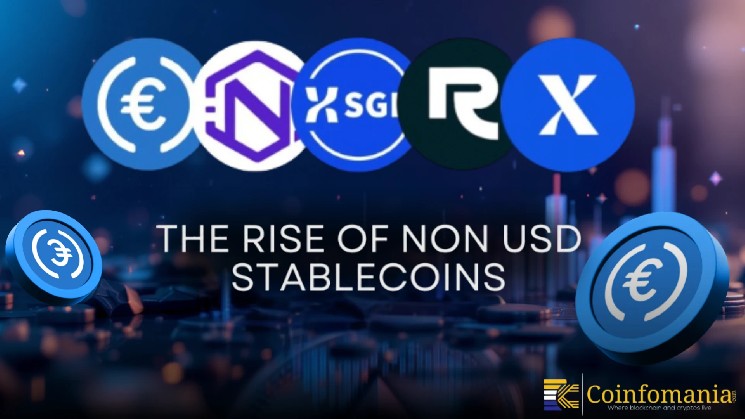
The non-USD stablecoin market has expanded significantly, offering alternatives to the US dollar peg for diversification and regional liquidity. As of 2026, the landscape is dominated by a few major players, each serving distinct geographic and utility-based niches. Understanding the structural differences between these tokens is essential for assessing yield risks and regulatory exposure.
Euro-Backed Stablecoins (EUR)
Euro-pegged stablecoins have gained traction as European institutions seek to reduce reliance on USD-denominated assets. These tokens are typically backed by cash and cash equivalents held in regulated European banks. The primary advantage is alignment with European monetary policy, though this also ties their performance to the European Central Bank's interest rate decisions. For investors, this creates a direct correlation with Euro yield opportunities, often providing slightly higher yields than USD stablecoins during periods of tight ECB policy.
Asian and Emerging Market Stablecoins
Stablecoins pegged to currencies like the Singapore Dollar (SGD) or backed by baskets of Asian currencies are gaining ground in cross-border trade. These tokens address liquidity needs in regions where USD access is restricted or costly. While their market capitalization is smaller than EUR or GBP equivalents, their growth rates often outpace broader market trends. This segment is particularly relevant for businesses operating in Southeast Asia, where regulatory frameworks are evolving to support local digital currency infrastructure.
Multi-Currency and Basket Pegs
A newer category involves stablecoins pegged to a basket of currencies or commodities, designed to mitigate single-currency risk. These tokens aim to provide stability through diversification within the peg itself. However, they introduce complexity in reserve auditing and transparency. Investors must carefully review the reserve composition and audit frequency, as opaque structures can lead to disproportionate risks during market stress. The yield potential is often higher, reflecting the additional complexity and liquidity premiums.
Selecting the Right Token
When choosing a non-USD stablecoin, prioritize regulatory clarity and reserve transparency over yield alone. Tokens issued by regulated financial institutions generally offer lower counterparty risk. Additionally, consider the liquidity depth on major exchanges, as thin markets can amplify volatility during sell-offs. Always verify the reserve audit reports, as these are the primary source of truth for backing integrity. For those seeking exposure to specific regional economies, EUR and SGD-backed tokens currently offer the most robust regulatory frameworks.
Risks and diversification strategy
Holding non-USD stablecoins introduces structural vulnerabilities that extend beyond simple price volatility. The primary risk is de-pegging, where the asset’s market value diverges from its reserve backing. While the non-USD stablecoin market grew to approximately $771 million in April 2026, it remains a marginal fraction of the broader ecosystem, representing less than 0.5% of total market share [1]. This low liquidity can exacerbate sell-offs during stress events, making it difficult to exit positions at fair value.
Regulatory divergence creates another layer of uncertainty. Unlike the EU’s MiCA framework or the UK’s stablecoin regulations, many emerging markets lack clear legal definitions for non-USD digital assets. This regulatory ambiguity can lead to sudden restrictions on exchanges or banking rails, effectively freezing assets without warning. Investors must assume that legal recourse in these jurisdictions is limited or nonexistent.
Currency fluctuation also poses a distinct threat. Non-USD stablecoins are often pegged to local fiat currencies that may face their own inflationary pressures or central bank interventions. A stablecoin pegged to a volatile currency can lose purchasing power even if it maintains its peg to that local currency.
To mitigate these risks, diversification is essential. Rather than concentrating exposure in a single non-USD stablecoin, investors should spread holdings across multiple jurisdictions and reserve types. However, given the current market size and regulatory headwinds, non-USD stablecoins should remain a small, speculative portion of any portfolio, not a core treasury strategy.
No comments yet. Be the first to share your thoughts!