
In the pulsating heart of Latin America's crypto revolution, Mexico City's MXN stablecoin liquidity stands out as a beacon for traders eyeing 2026 opportunities. With regional stablecoin transaction volumes exploding 89% year-over-year amid a $142 billion remittance market, peer-to-peer ramps have become the lifeblood of peso stablecoin trading. Platforms bridging fiat SPEI transfers to on-chain assets like MXNB and MXNe offer arbitrageurs real edges in volatile emerging markets, but success demands scrutinizing depth, spreads, and settlement speeds.

As of February 2026, Mexico's ecosystem reflects hard-won maturity. MXNB pairs such as MXNB-WAVAX and MXNB-USDC posted sharp volume spikes in May 2025, signaling robust liquidity inflows. MXNe, anchored on Base, clocked $18.3 million cumulative volume in its USDC pair by July 2025, underscoring DEX traction. Yet, true accessibility hinges on P2P infrastructure. Services like PayDece and Capa processed $27.8 million and $29.9 million respectively, funneling salaries and remittances into stablecoins via local rails. Bitso's forthcoming multi-platform aggregator and native token launch promise self-custodial perpetuals, blending CEX ease with DeFi control.
Mexico City Emerges as LATAM's P2P Ramp Epicenter
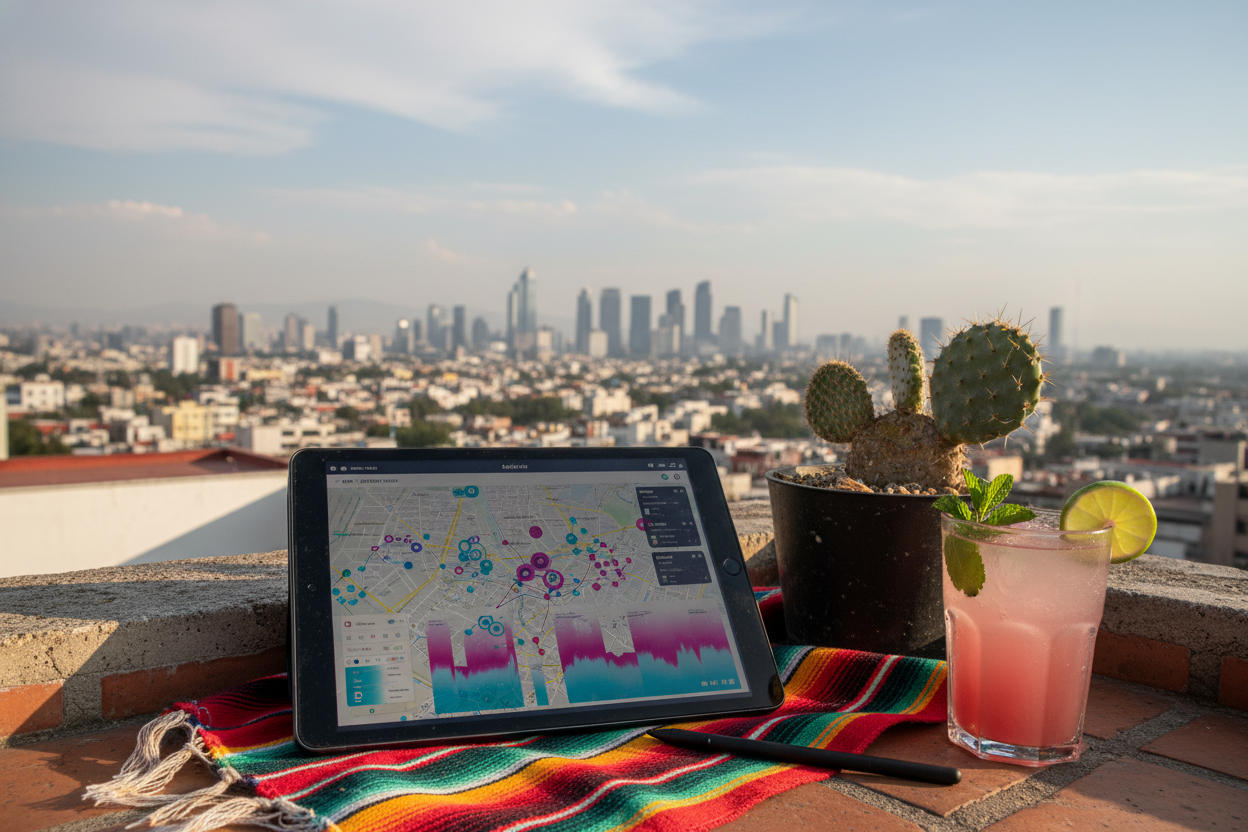
Geographically, Mexico City concentrates the highest density of Mexico City P2P ramps, fueled by urban fintech density and regulatory clarity. This MXN stablecoin map 2026 evolution positions the capital as a launchpad for arbitrage between spot premiums and DEX pools. Conservative traders prioritize ramps with proven depth to mitigate slippage during high-volume exits, especially as institutional inflows accelerate ahead of June's pivotal conference.
Stablecoin Conference 2026: Forging Liquidity Pathways
Set for June 15-16 at the World Trade Center, the Stablecoin Conference assembles regulators, banks, and innovators to map LATAM's next phase. Expect sessions dissecting Mexico crypto liquidity bottlenecks and P2P scaling. For exhibitors and attendees, it's prime networking to uncover unreleased ramp integrations, much like Bitso's 2025 payments map spotlighted key players. This event could catalyze partnerships elevating MXN stablecoin utility in remittances and payroll.
Navigating this landscape requires a granular view of top performers. Ranking by trading volume, order book depth, and arbitrage viability reveals clear leaders among Mexico City's P2P ecosystem. These platforms dominate MXN stablecoin liquidity, offering tight spreads on SPEI-to-stablecoin trades while minimizing counterparty risks.
[h2>Top 10 P2P Ramps Ranked for 2026 MXN ArbitrageBinance P2P leads with unmatched volume, its escrow system ensuring secure MXN-USDT swaps ideal for high-frequency plays. OKX P2P follows closely, boasting deep books that absorb multimillion-dollar flows without premium erosion. Bybit P2P excels in speed, settling via SPEI in under 30 minutes, a boon for time-sensitive arbitrageurs.
Bitget P2P and KuCoin P2P round out the top five, with the former's zero-fee promotions drawing volume spikes and the latter's diverse payment methods suiting retail inflows. MEXC P2P gains traction through aggressive incentives, while Gate. io P2P and HTX P2P provide reliable depth for institutional-grade trades. Bitso OTC Ramp integrates seamlessly with its exchange, offering OTC desks for whale-sized liquidity. Noones Mexico City, hyper-localized, thrives on community trust for smaller, high-velocity deals.
Evaluating these platforms through a risk-adjusted lens reveals nuances critical for sustainable peso stablecoin trading. Binance P2P's dominance stems from its vast user base, but watchful eyes should monitor occasional KYC escalations that could delay settlements. OKX and Bybit shine for depth, often maintaining spreads under 0.5% even during remittance peaks, making them staples for cross-border arbitrage between Mexico City P2P ramps and DEX pools like MXNB-USDC.
MXNB, MXNe, USDT Spreads & 24h Volumes: Top Mexico City P2P Ramps vs DEX Pools (Feb 2026)
| Platform | Type | MXNB Spread (%) / 24h Vol ($) | MXNe Spread (%) / 24h Vol ($) | USDT Spread (%) / 24h Vol ($) |
|---|---|---|---|---|
| Binance P2P | P2P | 0.40% / $2.1M | 0.50% / $1.4M | 0.30% / $29.9M |
| OKX P2P | P2P | 0.45% / $1.6M | 0.55% / $1.1M | 0.35% / $22.1M |
| Bybit P2P | P2P | 0.50% / $1.3M | 0.60% / $900K | 0.38% / $18.7M |
| Bitget P2P | P2P | 0.48% / $1.1M | 0.58% / $750K | 0.36% / $15.4M |
| KuCoin P2P | P2P | 0.52% / $950K | 0.62% / $650K | 0.40% / $12.8M |
| MEXC P2P | P2P | 0.55% / $800K | 0.65% / $550K | 0.42% / $10.2M |
| Gate.io P2P | P2P | 0.58% / $700K | 0.68% / $480K | 0.45% / $9.1M |
| HTX P2P | P2P | 0.60% / $650K | 0.70% / $420K | 0.47% / $8.0M |
| Bitso OTC Ramp | P2P | 0.35% / $1.9M | 0.45% / $1.2M | 0.28% / $27.8M |
| Noones Mexico City | P2P | 0.75% / $250K | 0.85% / $150K | 0.65% / $3.5M |
| MXNB–USDC (Avalanche DEX) | DEX | 0.12% / $620K | N/A | N/A |
| MXNB–WAVAX (Avalanche DEX) | DEX | 0.15% / $450K | N/A | N/A |
| MXNe–USDC (Base DEX) | DEX | N/A | 0.18% / $1.83M | N/A |
| USDT Pools (DEX) | DEX | N/A | N/A | 0.06% / $5.2M |
Lower-tier options like Bitget and KuCoin appeal to nimble retail traders, where promotional zero fees can amplify returns on sub-$10,000 flips. Yet, MEXC and Gate. io P2P cater to those scaling up, their institutional-grade APIs enabling automated bots to harvest inefficiencies. HTX P2P's edge lies in multilingual support for expat communities, while Bitso OTC Ramp leverages local regulatory compliance for seamless SPEI integration. Noones Mexico City rounds out the list with grassroots appeal, its Telegram-mediated deals fostering trust in underserved neighborhoods but demanding extra vigilance against fraud.
Arbitrage Tactics Tailored to Mexico City's Liquidity Map
Capitalizing on this MXN stablecoin map 2026 requires disciplined plays. A classic setup exploits premiums on P2P buys versus DEX sells: acquire MXNB via Binance P2P at a 1-2% fiat premium, then unwind on Base for MXNe-USDC at par, pocketing the spread after gas. Conservative practitioners layer in hedges, using Bybit P2P for quick entries while monitoring Bitso OTC for exits during volatility spikes. Depth metrics matter; platforms like OKX absorb $50,000 and without slippage exceeding 0.2%, per recent order book scans.
USD Coin Technical Analysis Chart
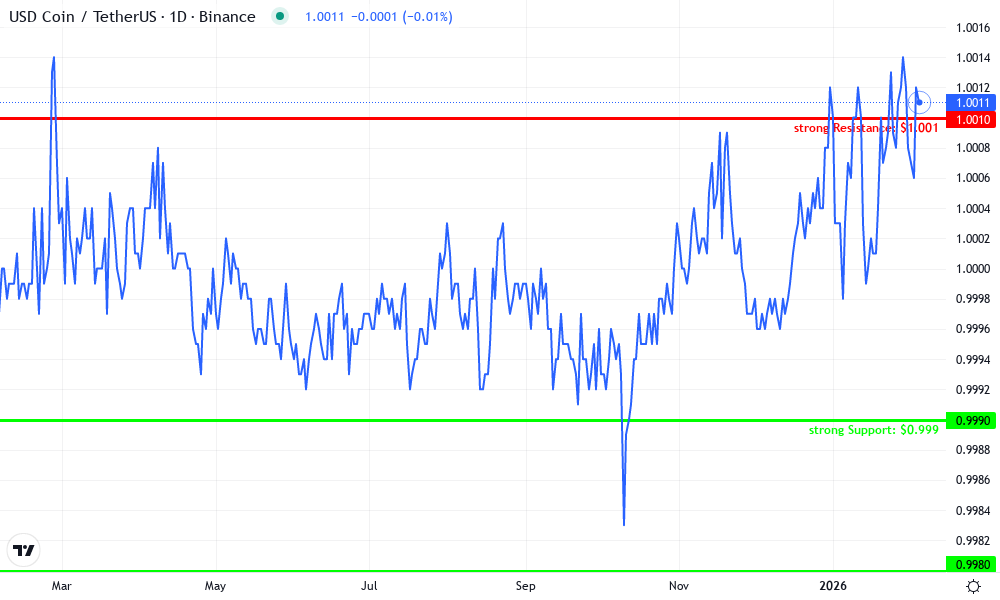
Analysis by Ethan Caldwell | Symbol: BINANCE:USDCUSDT | Interval: 1D | Drawings: 6
Technical Analysis Summary
On this USDCUSDT chart spanning May to November 2026, draw horizontal_lines at key support at 0.9990 and resistance at 1.0010 to highlight the tight peg maintenance. Add trend_line for the subtle uptrend from May low connecting to November high. Use rectangle for the ongoing consolidation zone from 2026-07-01 to present between 0.9985-1.0005. Place callout texts labeling 'Peg Hold Strong' at recent highs and 'Minor Dip' at September low. Mark vertical_line at 2026-06-15 for Stablecoin Conference impact. Include long_position marker near 1.0000 entry with low-risk profile.
Risk Assessment: low
Analysis: USDC's proven peg maintenance amid 89% LATAM volume surge minimizes depeg risk; fundamentals outweigh technical noise
Ethan Caldwell's Recommendation: Accumulate and hold long-term for remittance utility; avoid leverage
Key Support & Resistance Levels
📈 Support Levels:
- $0.999 - Strong peg floor tested multiple times in Sep-Nov strong
- $0.998 - Secondary support from July consolidation low moderate
📉 Resistance Levels:
- $1.001 - Key upper peg boundary respected since June strong
- $1.002 - Minor resistance at recent November highs weak
Trading Zones (low risk tolerance)
🎯 Entry Zones:
- $1 - Peg centerline with LATAM adoption tailwinds, low-risk hold entry low risk
🚪 Exit Zones:
- $0.997 - Below strong support invalidates peg hold 🛡️ stop loss
- $1.003 - Conservative profit on minor breakout post-conference 💰 profit target
Technical Indicators Analysis
📊 Volume Analysis:
Pattern: Increasing on peg holds
Volume spikes align with LATAM remittance growth, supporting accumulation
📈 MACD Analysis:
Signal: Neutral to bullish
MACD line above signal with flat histogram, indicating stable momentum
Applied TradingView Drawing Utilities
This chart analysis utilizes the following professional drawing tools:
Disclaimer: This technical analysis by Ethan Caldwell is for educational purposes only and should not be considered as financial advice. Trading involves risk, and you should always do your own research before making investment decisions. Past performance does not guarantee future results. The analysis reflects the author's personal methodology and risk tolerance (low).
Timing aligns with remittance cycles, where Friday inflows swell volumes 40%. Pair this with macro overlays: Banxico rate decisions or USDC mints often trigger 0.5-1% dislocations ripe for harvest. My analysis favors multi-ramp diversification - allocate 40% to top-three (Binance, OKX, Bybit), 30% to mid-tier volume chasers, and 30% to locals like Noones for alpha in thin markets. This mitigates platform-specific outages, a recurring pitfall in 2025.
Risk Management in Volatile Peso Flows
No Mexico crypto liquidity strategy endures without safeguards. Counterparty defaults, though rare on escrowed platforms, underscore the need for sub-$5,000 per trade caps initially. Regulatory headwinds loom; while Mexico's sandbox nurtures innovation, abrupt SPEI tweaks could squeeze ramps. Track CNBV filings and conference whispers for early signals. Volatility in underlying pegs - MXNB deviated 0.3% last quarter - demands oracles like Chainlink for real-time validation before bridging.
Fundamentally, treat P2P as a utility, not speculation. Stress-test via simulations: a 2% spread on $100,000 monthly volume yields $2,000, but deduct 20% for risks and fees. Platforms like KuCoin P2P's dispute resolution and Bitget's insurance funds bolster resilience. For institutions eyeing scale, Bitso OTC and Gate. io P2P offer API depth, integrating with treasury dashboards for automated rebalancing.
Looking ahead, June's Stablecoin Conference could unlock tiered partnerships, perhaps federated ramps merging Noones' locality with Binance scale. As LATAM volumes chase $200 billion, Mexico City's ramps will anchor regional dominance, rewarding those who blend volume intel with prudent positioning. Traders equipped with this map navigate not just liquidity, but lasting edges in emerging DeFi frontiers.




No comments yet. Be the first to share your thoughts!